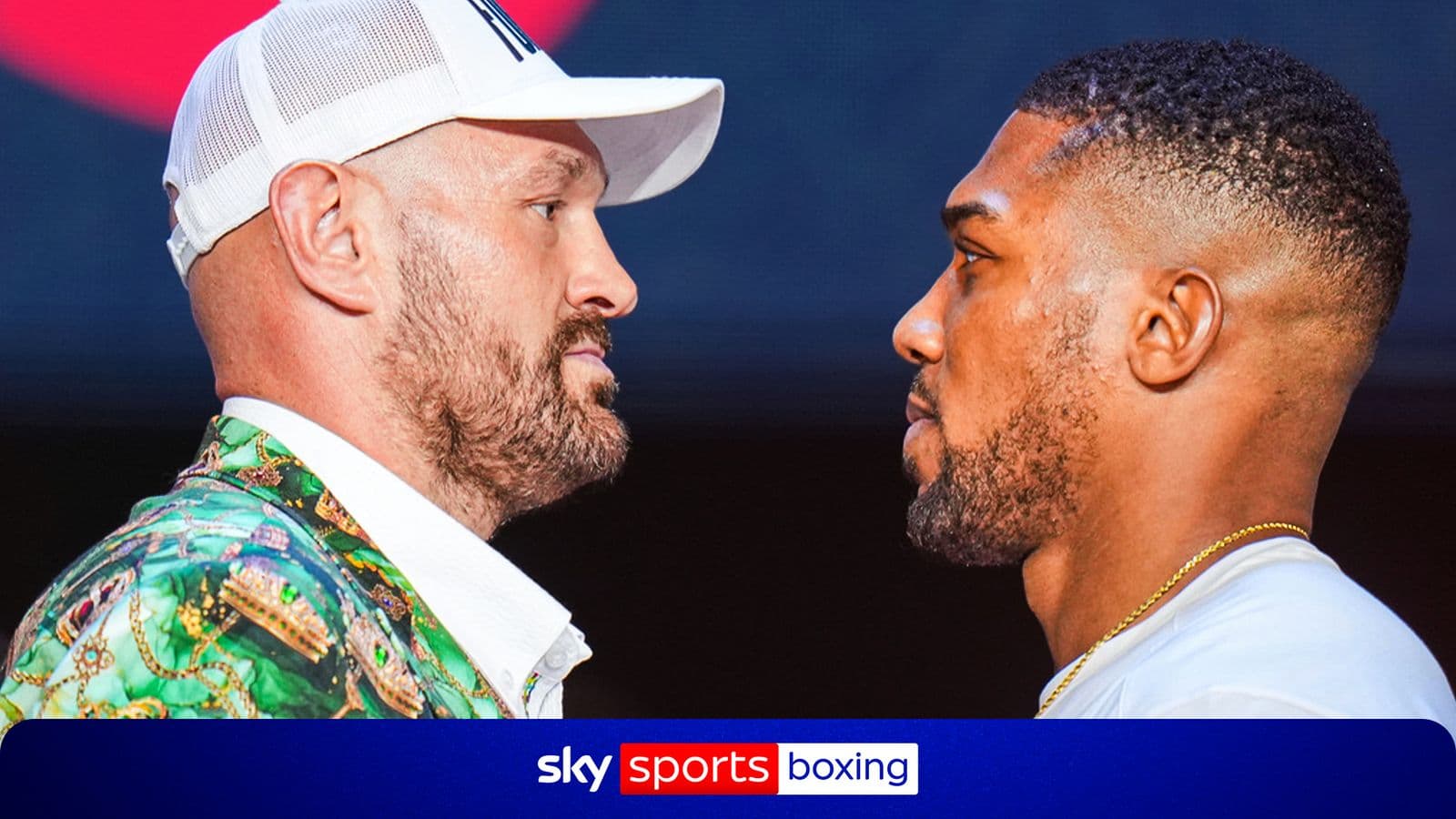
As Tyson Fury and Anthony Joshua prepare for their heavyweight collision, Sky Sports has tackled the most pressing queries from fans eager to understand what makes this fight so significant. The pair will finally settle their long-running rivalry at Cardiff's Principality Stadium, with the WBA heavyweight title on the line.
The journey to this December 11 showdown has been fraught with complications, but the fight is now confirmed. According to ESPN, the bout was agreed for December 11, 2026, at Cardiff's Principality Stadium, with the WBA heavyweight championship now set to be contested, as confirmed by Fury's promoter Frank Warren.
Comparing their shared opponents
When assessing how each fighter has performed against common foes, the picture becomes clearer. Both Fury and Joshua have faced Oleksandr Usyk on two occasions, and both have lost to him twice. Joshua's first encounter with Usyk saw him struggle to impose himself, though he delivered a more convincing display in their rematch. Fury, by contrast, impressed in his initial meeting with Usyk, demonstrating strength throughout the opening half of that contest. At the elite level they operate, Fury emerged with the stronger showing against the Ukrainian.
Their records against Francis Ngannou tell a different story. Fury found himself in difficulty against the former UFC heavyweight, whilst Joshua managed to level the score against the crossover fighter. When examining their bouts with Wladimir Klitschko, Joshua faced an older version of the German, potentially one who had absorbed lessons from his encounter with Fury. Klitschko pushed Joshua harder than he did Fury, who exercised superior control and secured a decision victory in Germany. Overall, Fury appears to hold the edge against their highest-calibre shared opponents, though reasonable arguments exist on both sides.
The path forward after December 11
Should Fury emerge victorious, a trilogy with Usyk remains a possibility he would pursue, though the commercial viability of such a contest remains questionable. Daniel Dubois presents a more straightforward promotional opportunity for the winner. Neither Fury nor Joshua possesses a victory over Usyk, and whilst their first encounters warranted rematches, a third meeting between either man and the Ukrainian may be unnecessary. The winner of the Cardiff clash will likely have more attractive options to pursue.
Understanding the WBA title situation
The presence of a championship belt has puzzled many observers. The WBA's decision to sanction this bout for a 'super' title remains unexplained by the governing body itself. Both fighters are former champions, yet the WBA already recognised Murat Gassiev as its 'regular' titlist, and neither Fury nor Joshua held the position of the WBA's number one contender entering this fight. In reality, this contest requires no belt to justify its significance—the battle between these two British heavyweights stands on its own merits.
The promotion and Saudi Arabia's role
This fight would not materialise without Turki Alalshikh, chairman of Saudi Arabia's General Entertainment Authority. The official announcement indicated his involvement alongside Dana White, creating questions about how White's participation aligns with the existing contracts held by Eddie Hearn with Joshua and Frank Warren with Fury. Nevertheless, Alalshikh remains the financial backer and primary promoter of the event, making this Saudi-backed venture possible.
Who needs the victory more?
Joshua possesses an impressive resume built on high-quality opposition, yet he has never shared the ring with Deontay Wilder—a fighter Fury has faced three times. Fury has held every major heavyweight world title at various points and arguably demonstrated superior performances across his two encounters with Usyk. For his legacy, Joshua likely requires this victory more urgently. That said, this question admits of legitimate debate from multiple angles.
Adjusting to the early morning schedule
Fighting in the early hours of the morning for a UK audience, whilst prioritising American viewership, presents a unique challenge. However, fighters have adapted to such schedules before. When covering fights in Saudi Arabia, competitors have completely restructured their routines—one fighter visited in camp did not rise until 4:30pm, took breakfast at 5pm, and trained at 2am. Fury and Joshua will similarly reorganise their entire schedule and establish a new rhythm. Fury already trains in America and operates on US time, giving him a head start in this adjustment.
The decision to schedule the fight at this time reflects the massive Netflix audience across America, coast to coast, where viewing figures are expected to be stronger at that hour, despite both fighters being British.
Retirement and the aftermath
Whether the loser retires depends entirely on the nature of defeat. Fury has repeatedly stated his desire to continue as long as possible, though his history includes multiple retirements and unretirements, suggesting he could follow that pattern again. Joshua, conversely, might face pressure to retire following a heavy loss. As an Olympic gold medallist, two-time unified world heavyweight champion, and British boxing icon, Joshua has nothing remaining to prove and could justifiably hang up his gloves.
Stamina and the distance
Joshua has gone the full 12 rounds on five separate occasions, with no indication of stamina concerns. Whilst he carries more muscle mass and Fury possesses a natural rhythm, Fury does not maintain a relentless pace. To trouble Joshua over the distance, Fury would need to force him to think differently, impose an unfamiliar tempo, and demand greater exertion than Joshua typically expends.
The draw scenario
Should the judges score the bout a draw after 12 rounds, an immediate rematch would be almost inevitable. Both fighters would have gathered crucial information about each other, the narrative could be rebuilt and amplified, and they would be compelled to run it back. A draw would guarantee a sequel.
Fury's knockout power
Historically, Fury was not regarded as a heavy puncher relative to his weight. That perception shifted dramatically following his devastating performances in the second and third fights against Deontay Wilder. Joshua has been hurt before, most recently and alarmingly when he faced Kristian Prenga in a July 25 comeback bout in Riyadh. Fury certainly poses a genuine knockout threat to Joshua.
Why not Wembley Stadium?
Wembley Stadium lacks a roof, making weather conditions at that time of year a significant factor in the decision. The late main event start time, whilst requiring licensing approval, proved less problematic than environmental concerns.
The undercard and Welsh representation
The undercard remains unconfirmed, though Dana White is reportedly working to arrange Jai Opetaia versus Deontay Wilder on the bill. Both Queensberry and Matchroom will field fighters on the card, but specific details await official confirmation. Welsh boxers could feature prominently on the undercard, though this remains to be determined.
Notably, Oleksandr Usyk has joined Joshua's training team and said he would help him prepare to face Fury, adding an intriguing dimension to Joshua's preparation for the showdown.
What happens next
The heavyweight landscape will be transformed on December 11 when Fury and Joshua finally collide at Cardiff's Principality Stadium. The winner will emerge with the WBA heavyweight title and the right to claim supremacy in the division, whilst the loser faces crucial decisions about their future in the sport.