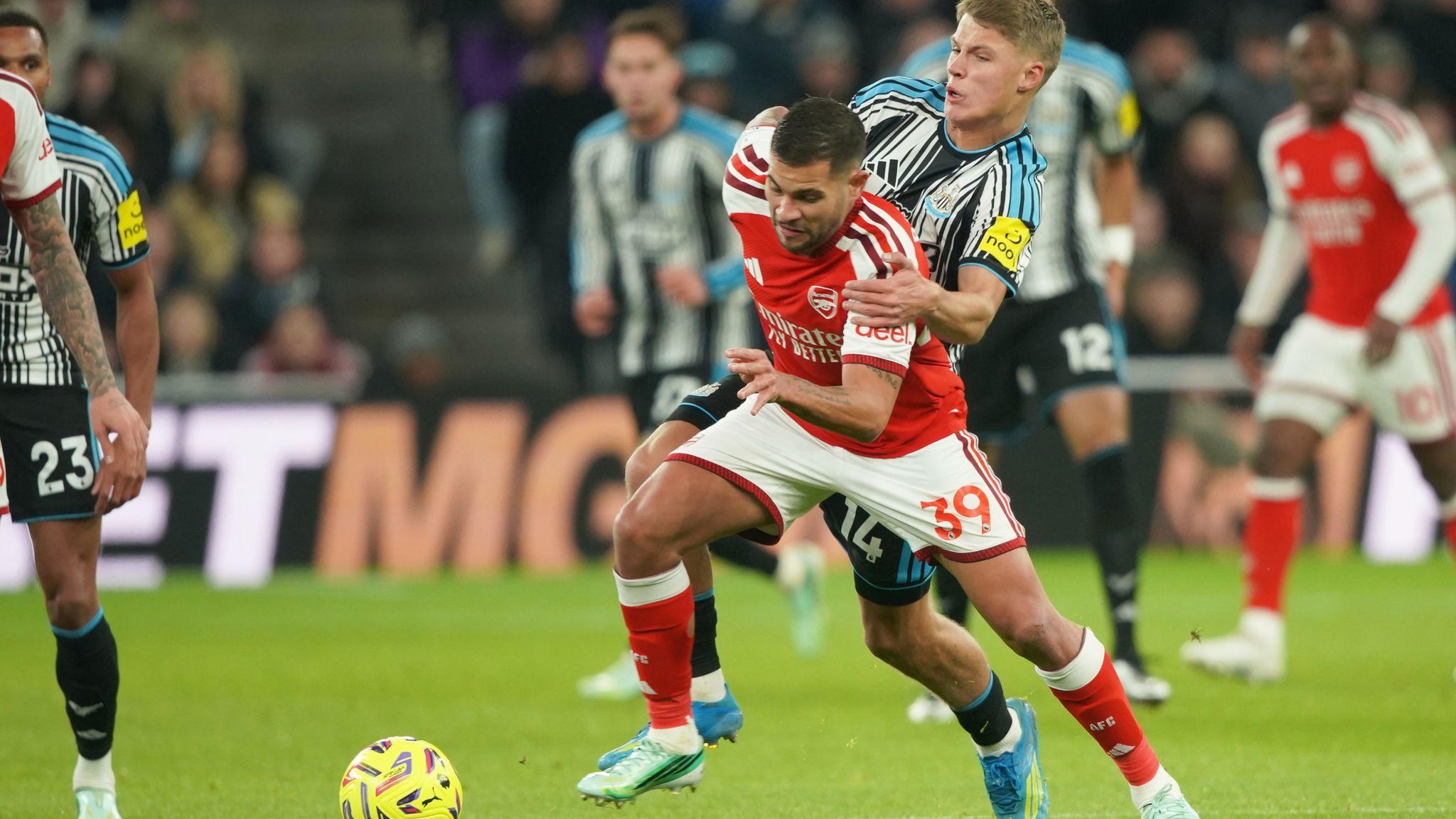
Arsenal's transformation from "exceptional" to "complacent" across 90 minutes at St James' Park exposed a vulnerability that could prove costly in their title defence. Noni Madueke's equaliser salvaged a 2-2 draw, but according to Sky Sports, manager Mikel Arteta made clear his side had surrendered two points through a catastrophic second-half collapse.
The defending champions dominated the opening 45 minutes with such control that a three or four-goal lead seemed inevitable. Yet after the interval, Sky Sports reported that Newcastle's manager Matthias Jaissle's triple substitution—introducing Tino Livramento, Jacob Ramsey and Anthony Elanga—transformed the contest entirely. Harvey Barnes and Malick Thiaw scored the goals that turned the match on its head, leaving Arsenal fortunate to preserve their league leadership.
Arteta's frustration was evident in his post-match assessment.
My feeling is that we lost two points today. We were exceptional in the first half. At every level. Our intensity, the clarity that we have, how to attack the jumps of Newcastle every time they wanted to go man-to-man, the composure that we have, the way we use our relationship to break their press.
The manager outlined how Arsenal's dominance should have translated into a commanding scoreline.
It should have been 2-0, 3-0 or 4-0 up. But it wasn't. And when it wasn't, then we expected in the second half that we have to again raise the level because the opponent is going to have a reaction.
Instead, Arsenal's standards plummeted. Arteta identified the moment Newcastle gained momentum as pivotal.
The opponent did have a reaction and we were very below the level that is required to stretch the gap in a game like this in this stadium. And then we gave them belief. I say we give them belief because we give them a goal, we give them a throw-in that we just give them the ball. We have no structure to control the opposite winger. We concede a goal and it's game on.
The chaos that followed proved costly.
And from that it became a very chaotic game. Every set-piece, we know that they are exceptional at it and we concede from a set-piece.
Arsenal did recover to create numerous chances in the final quarter.
And then you have to react. Then we went back to the exceptional team that we were in the first half again for another 25 minutes and we scored a great goal. We create infinity of openings to create and score the third goal, but we lack some time or to be precise, to make that count.
The statistical contrast between the two halves underscored Arteta's concerns. Attacking metrics and crucially duel success rates shifted dramatically in Newcastle's favour after the interval, painting a stark picture of Arsenal's second-half malaise.
Sky Sports pundit Jamie Redknapp attributed the downturn to a loss of intensity.
I think in the second half Arsenal were just complacent. I think they thought this was so easy and that can happen sometimes in a game. You're getting so much time on the ball. Declan Rice was able to turn. Bruno Guimaraes had so much time in the first half and then all of a sudden Jacob Ramsey comes on and he's all over you. He's closing you down. Myles Lewis-Skelly's getting under pressure and that was a full credit to Newcastle. The fundamentals that you have to do to win a football match by winning second balls, by putting teams under pressure, by getting in people's faces, Newcastle did well in the second half.
Former Arsenal striker Ian Wright raised deeper concerns about the midfield's vulnerability.
What's worrying for me and probably for Arsenal fans is that that period where we seem to can't get it back, can't grasp it back. I think Newcastle could have maybe nicked another one while it was 2-1, but they didn't. I'm very concerned with the Declan Rice and Bruno Guimaraes midfield. It just didn't feel in that moment that we were able to keep them off us.
Wright added:
It was worrying to see Arsenal collapse like they did, for the time that they did.
The match also brought injury concerns. Arsenal goalkeeper David Raya sustained an injury during the contest, according to coverage from the match, adding to Arteta's mounting problems.
Goalscorer Madueke acknowledged Arsenal's character in fighting back from 1-0 down to 2-1 down, but identified the root cause of their struggles.
Not sticking by our own principles. I don't know whether we came out too relaxed after the first half performance.
Newcastle's second-half transformation deserves significant credit. The attendance of 52,661 witnessed a remarkable turnaround, with match statistics showing Newcastle finished with 12 shots to Arsenal's 13, and the teams recorded expected goals of 1.73 and 1.49, respectively. The home side's energy and tactical adjustments proved decisive in shifting the momentum.
Arteta was full of praise for Jaissle's intervention.
I think first half for any player in that Newcastle team, even in that dressing room, that would have been a lonely place because you were getting played off the park, the spaces seemed so big, your home crowd have been booing you. You're like, 'this is going to be a really tough half'. He made three great changes. Elanga added pace, Livramento good energy down that right-hand side, and Ramsey was one of the best players on the pitch. Newcastle, full respect from me, and I thought they showed a great deal of effort and they played against a very difficult side in Arsenal, but they got after them. It just shows you what a bit of energy can do. And once that crowd get up and you get that first goal, anything was possible. And they'll look at that second half thinking, actually, we could have won this game. Really good performance from Newcastle. I would give Jaissle more credit because he's taken a lot of stick. It's been really hard for him, but he's definitely got some money in the bank tonight. He'll be proud of his team. The fans will be proud of their team. And they made it very difficult for Arsenal that second half.
Despite the draw, Arsenal's position at the top remains secure for now. Manchester City dropped points again on Saturday, and Brighton's fixture on Sunday offered no guarantee of closing the gap. Yet Arteta's message was unambiguous: the defending champions must eliminate the inconsistency that nearly cost them dearly on Tyneside.
The manager was emphatic about the standard required going forward.
I think individually we have some top performances for 70 minutes. But at this level it's not enough. At this level requires 96 minutes unless you score three or four goals and then you can allow yourself for 15 or 20 minutes not to be at your best. That's the next step this team has to make.
Arsenal had won nine of their first 10 league matches before this fixture, according to match coverage, establishing themselves as genuine title contenders. However, this draw exposed the psychological vulnerability that can afflict defending champions—the belief that dominance in one half guarantees a result, and the failure to maintain intensity when opponents respond.
Arteta's challenge now is to harness this harsh lesson and ensure his squad understands that Premier League football demands relentless focus across all 96 minutes. The quality of Arsenal's first-half display proved they possess the talent to win any match. Their second-half collapse proved equally that talent alone is insufficient without discipline, structure and unwavering concentration.