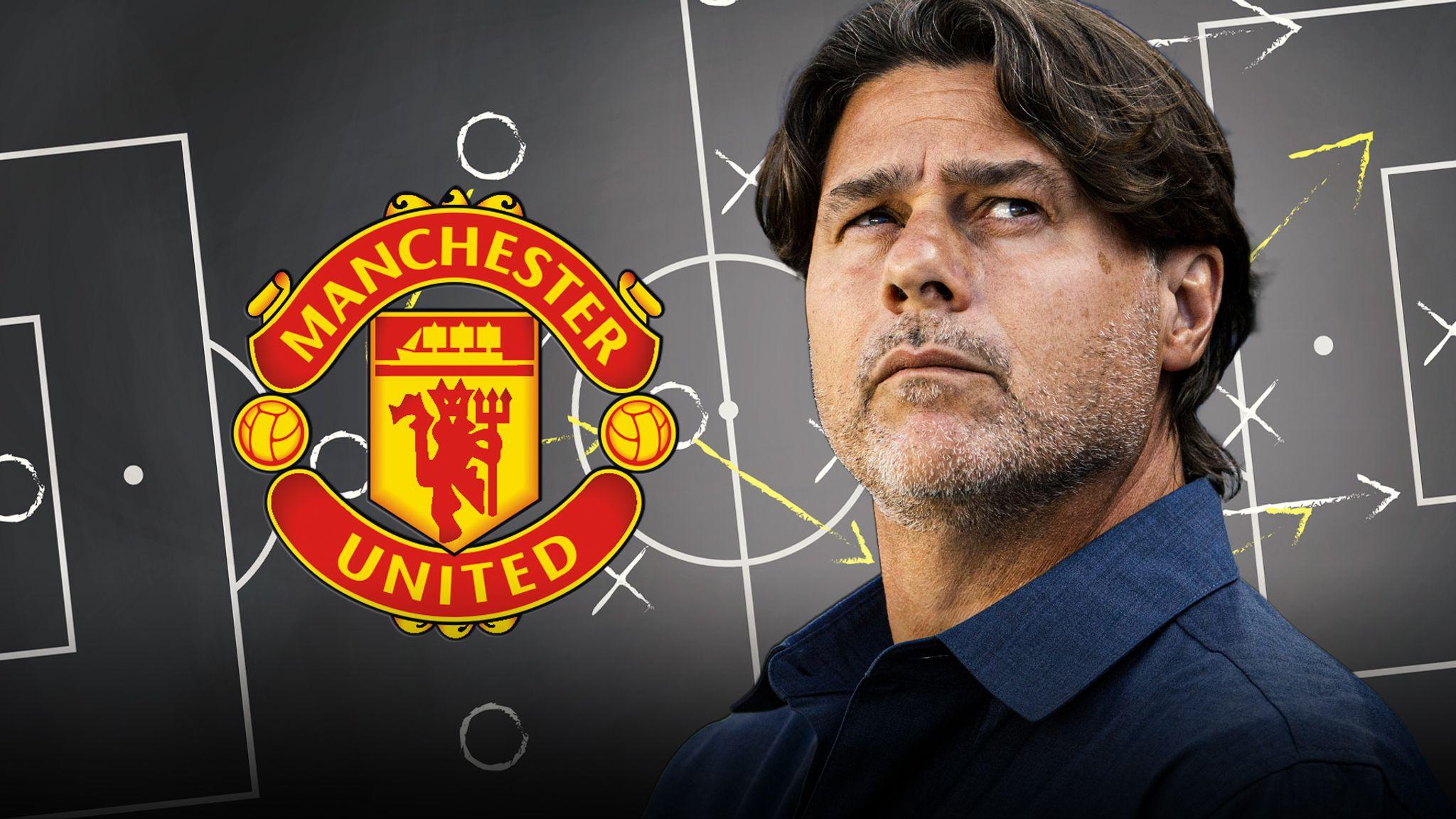
The achievements Mauricio Pochettino delivered during his tenure at Tottenham Hotspur appear even more striking in retrospect than they seemed when he was actually delivering them. Manchester United ought to have pursued the charismatic Argentine manager far earlier than they ultimately did.
According to Sky Sports, during his five complete campaigns in north London, Spurs finished in the Premier League's top five every single season—a record that remains unmatched in the club's history. He elevated the club above Arsenal for the first time in a generation and guided them to a Champions League final that had never been reached before in their history.
Trophies eluded him, much to the satisfaction of detractors, though the ongoing charges against Manchester City serve as a useful reminder that he was operating under considerable structural disadvantage. He achieved more than the circumstances should have allowed, and it is the quality of his attacking football that lingers in supporters' minds.
The broader narrative has shifted in favour of his demanding, high-intensity approach to the game.
He represents a natural fit for Manchester United, an institution that has stumbled from one misstep to another yet managed to appoint just a single manager with genuine Premier League experience over more than a decade—and Ole Gunnar Solskjaer's brief spell managing Cardiff City hardly justified the appointment.
Yet Pochettino, despite his considerable personal magnetism—a quality that has generated considerable support among media figures—arrives with an unresolved question hanging over him. There remains something to demonstrate, given that his Tottenham chapter concluded precisely seven years ago.
Jose Mourinho and Louis van Gaal have both been dismissed as relics of an earlier era even as they took their respective posts, the former somewhat oddly so given that he is presently managing Real Madrid. Mourinho, however, arrived at Old Trafford merely two years removed from winning a Premier League title. For Van Gaal, United would prove to be his final managerial role. Yet even he came fresh from a more respectable World Cup campaign and had steered Bayern Munich to a Champions League final just four years prior, not seven.
Pochettino has scarcely been idle during his absence from English football. He secured a Ligue 1 title with Paris Saint-Germain, though it took him two attempts. Some observers highlight his contribution with the United States national team. Others draw particular attention to how he managed a volatile situation at Chelsea.
That turbulent environment may well have equipped him for his current challenge. Pochettino officially began work as Manchester United head coach on November 18, 2026, after departing the U.S. men's national team where he had compiled a record of 21 wins, 12 losses and two draws.
There exists a compelling case that rather than compromising his footballing philosophy through these varied assignments, he has evolved into a more complete manager as a consequence. Player management will hardly present a novel problem to someone who previously had to balance the egos of Lionel Messi, Kylian Mbappe and Neymar in attack.
Attempting to get those three to press opposition defenders offers a particular challenge.
Nevertheless, it is his work constructing that Tottenham squad that generates the most optimism. Can he assemble a similarly cohesive unit at Old Trafford? Does he even wish to, given that the Pochettino imprint has been less pronounced in his subsequent positions?
Throughout his initial six seasons managing in the Premier League, Pochettino's teams never fell below third place in PPDA—the standard measurement for pressing intensity. His Tottenham sides were relentless pressers, much like his earlier teams at Espanyol and Southampton. In his final four complete seasons at Spurs, his teams never ranked lower than third for distance covered per match either. Yet his Chelsea team finished among the bottom three on that same metric, illustrating how he has adapted his methods to extract results under different circumstances.
That adaptation will certainly be necessary at United, at least in the short term. He inherits a squad of players fundamentally misaligned with the football that established his reputation. As his predecessor memorably observed: "If you don't run forward and you don't run back, you aren't going to win."
The positive aspect is that his standing should grant him both time and the benefit of doubt. Sufficient runway exists for his tactical concepts to take shape. He has not spent two years at a single club since departing Spurs and now holds a contract extending through the summer of 2029.
Time will be essential. One recalls a final interview he gave to Sky Sports during his final Tottenham season, when the tempo of his team's play began to diminish and the sparkle of his attacking football started to fade. His words from that conversation remain pertinent to United's current predicament.
"With a team that plays in the Champions League, a team in which 90 per cent of the players play for their national sides, it is important to remember how important pre-seasons are. This year, we did not have the stability and we started working late."
Before he constructed that vibrant Spurs side centred around Harry Kane, he required time to assemble the necessary pieces. In that opening campaign, he deployed Federico Fazio and Vlad Chiriches, Etienne Capoue and Paulinho, Roberto Soldado and Emmanuel Adebayor. The transformation took patience and careful recruitment.
At United, the scale of reconstruction required will be substantially greater. It represents an enormous undertaking, yet this could ultimately prove to be the defining challenge of his managerial career, even if Pochettino is already a decade older than Sir Alex Ferguson was upon his arrival at Old Trafford. Perhaps they are destined for one another after all.
Both institution and manager are attempting to recapture former glories. United appointed Pochettino after sacking Michael Carrick, with the club triggering a reported $10 million release clause in his U.S. Soccer contract.
The Road Ahead
Pochettino's first assignment comes swiftly. United's opening fixture under his stewardship is scheduled for Sunday, November 22, 2026, away to Liverpool—a fixture that will provide an immediate examination of his ability to impose his methods on a struggling squad.
His departure from the United States came after leading the team to the round of 16 at the 2026 World Cup. Steve Cherundolo, formerly head coach of LAFC, was set to take charge of the U.S. team's December camp on an interim basis while U.S. Soccer sought a permanent successor.