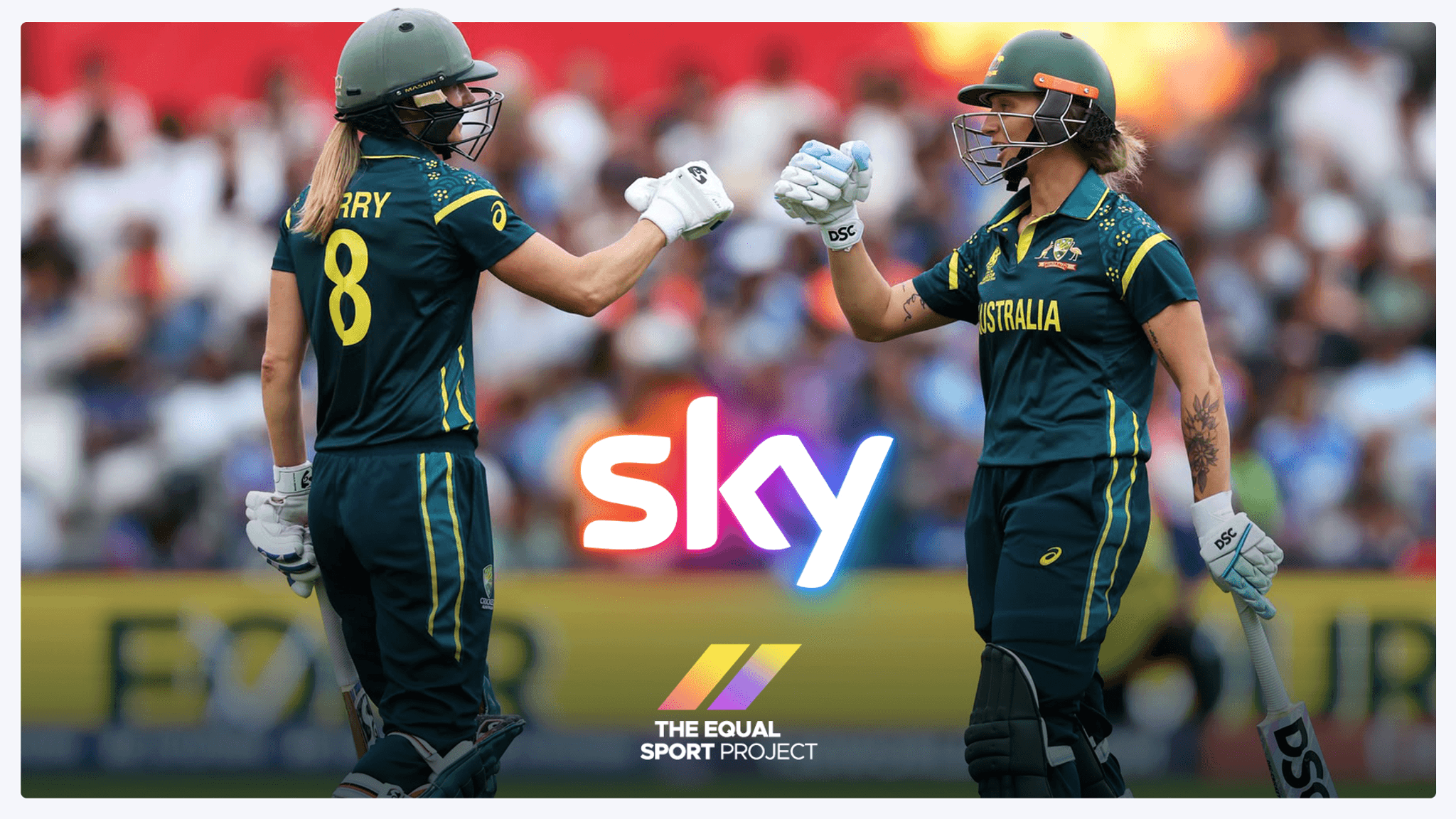
Sky Sports has committed its backing to the Equal Sport Project, a coordinated initiative designed to accelerate progress towards gender equality across the entire UK sporting landscape. According to Sky Sports, the broadcaster is pledging support for the project's five shared ambitions, which aim to drive meaningful change from grassroots participation through to elite competition.
The Equal Sport Project unites major sporting organisations across the UK behind a common framework for women and men in sport. The initiative encompasses organisations ranging from local leisure centres to the biggest stadiums, and from grassroots pitches to boardrooms. Leading bodies including the FA, RFU, Youth Sport Trust, England Netball, UK Sport, LTA, Women's Sport Trust, Women in Sport, Team GB and Sport England have all published specific pledges to act and help deliver the project's ambitions. Brands and broadcasters are also among the organisations committing support, with the industry being asked to continue building momentum in the months and years ahead.
The project arrives at a moment when women's sport has gained unprecedented traction. Participation numbers are climbing, broadcast audiences are expanding and investment is accelerating. However, the initiative also acknowledges that progress remains uneven and that substantial inequalities persist across all levels of the sporting system, from community and school sport to the highest professional tiers.
Research published earlier this year by Sporting Insights revealed stark disparities in the sector. Fewer than 1 per cent of women working in sport believe gender equality has been achieved across the industry, while more than half believe they are paid less than men for doing identical work. Women's sport also continues to receive a disproportionately small share of media attention, accounting for around 9 per cent of broadcast sports coverage on key channels and 8 per cent of prime-time sports coverage.
Gendered attitudes remain a significant barrier to participation. Research shows that 41 per cent of boys agree some sports are for boys only, while nearly two-thirds (64 per cent) of girls want to be more active. Confidence, body image, unequal facilities and gender stereotypes continue to prevent girls from engaging fully in sport. Youth Sport Trust research published ahead of the project's launch found that sporting gender stereotypes take hold from a young age, and called for girls' voices and needs to shape sport and physical activity.
The Equal Sport Project has identified five specific areas where collective leadership, investment and action will have the greatest impact. The initiative calls on the entire system to align behind these priorities, recognising that myriad other priorities already exist across the sector.
Sky Sports CEO Johnathan Licht outlined the broadcaster's commitment in a statement on LinkedIn.
For more than 30 years, Sky has backed women's sport. Today, we're the UK's leading investor in women's sports rights, investing in its growth and giving female athletes a platform on the biggest stage.
Licht emphasised that visibility alone is insufficient for lasting change.
Lasting change means breaking down the barriers that prevent girls from having the same opportunities to play, participate and stay in sport.
Sky's own research has quantified the scale of the problem.
Our Game Changing research found that girls in the UK miss out on 280m hours of sport every year. That's a gap we're determined to help close.
The broadcaster outlined its approach to addressing these barriers.
That's why I'm proud that Sky is pledging its support to the Equal Sport Project. We'll continue to use our investment, platforms, partnerships and insight to grow women's sport, while going beyond broadcasting to create more opportunities for girls to participate.
Sky has already launched several initiatives aimed at converting visibility into participation.
Through initiatives including the Alessia Cup and our wider Game Changing work, we're focused on turning visibility into participation and helping create lasting change for women and girls in sport.
Licht stressed that industry-wide collaboration will be essential to achieving meaningful progress.
There's much more to do, and more to come from us on this soon. Collaboration across the industry will be critical if we're going to break down these barriers and close the gap.
The pledges are already gaining momentum beyond the initial signatories. Youth Sport Trust reports that several multi-academy trusts have since made pledges supporting the project, and the Association of School and College Leaders has pledged to promote it to members. These commitments are translating into concrete action in schools and educational settings.
United Learning, one of the multi-academy trusts backing the project, has set an ambitious target. United Learning's pledge includes working toward 90% of girls in its schools being active for an average of 30 minutes a day at school. This approach recognises that building sustainable participation requires embedding physical activity into the daily school experience.
Other educational trusts are implementing tailored strategies to remove barriers to participation. Insignis Academy Trust plans to introduce 10–15-minute "Try-Before-You-Commit" sessions, a "Bring a Buddy" approach, and educator training on puberty, body confidence and gender stereotyping. These initiatives address both practical obstacles and the psychological factors that discourage girls from engaging in sport.
What happens next
Youth Sport Trust says it hopes the pledges will prompt more multi-academy trusts and schools to join the project, expanding the reach of these equality-focused commitments across the education sector. The momentum generated by these early pledges is expected to encourage further organisations to develop their own specific commitments to the five shared ambitions.