Spain celebrate World Cup glory, then face tax hit
Spain’s World Cup heroes have been hit with a hefty tax bill after their 1-0 victory over Argentina in the final.
Luis de la Fuente’s side dominated proceedings at the MetLife Stadium on Sunday night and were justly rewarded with an extra-time winner courtesy of Ferran Torres.
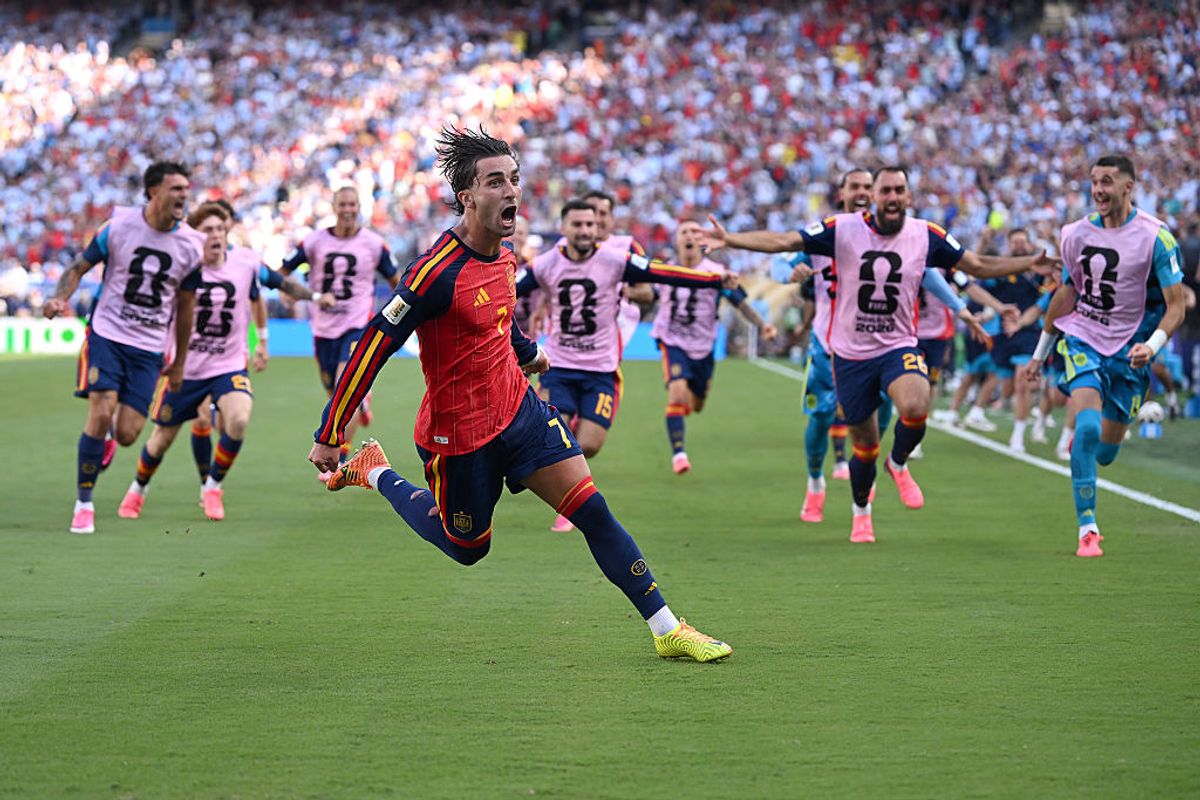
For the 26-man Spain squad, nothing will quite match the euphoria of adding a second star above their nation’s badge. Yet, they certainly would have welcomed the huge financial boost they received for lifting the iconic golden trophy from the Royal Spanish Football Federation (RFEF).
According to Gestha, the Spanish union representing Tax Agency experts, each player is set to receive a gross payout of €754,701.92 (£640,500) for winning the World Cup. The sum aligns with the agreement reached with RFEF, under which the players were to receive 45% of the prize money FIFA awards to the governing body for winning the tournament - a total sum of around €44million (£37.3m).
JOIN US ON FACEBOOK! Latest news, analysis and much more on Mirror Football's Facebook page
As a result, around €19.8m (£16.8m) will go to the players, after reportedly agreeing to only collect major bonuses if they reached the latter rounds.
However, the players immediately had to part ways with a significant chunk of that cash due to income tax. Depending on where they play their club football, the Spanish players’ personal income tax reaches 49.5 per cent, and in others it is around 45 per cent, amounting to each player losing a maximum of €370,000 (£314,000) to tax.
The 17 squad members currently playing their football in Spain are subject to the country's prevailing personal income tax (IRPF) regulations, specifically those of the particular Autonomous Community where they reside. Given the high income levels typical of these players, the entire bonus falls into the highest marginal tax bracket.
Since personal income tax combines state and regional scales, the tax burden depends on the individual's region of residence, of which there are 17. In some instances, such as the Community of Madrid, the marginal rate reportedly hovers around 45%, though it can exceed 50% in certain regions. It stands at 49% in the Basque Country, while in Catalonia, home to a significant number of players, it ranges from 47% to 49.5%.
That is to say, in the best-case scenario, an international player competing in Spain would receive a total of €385,000 (£327,000) in bonus payments. If the rate rises to 49.5%, that figure drops to €353,500 (£300,000).
The list of players required to declare these amounts under these strict conditions includes names from the elite of Spanish football, such as Lamine Yamal, Dani Olmo, Pau Cubarsi, Eric Garcia, Joan Garcia, Marc Pubill, Ferran Torres, Pedri, and Gavi.
Spain's public treasury will be delighted, with members of the squad playing in the Spanish league paying a total of around £5m in taxes. The situation is different for international players competing in foreign leagues, such as Mikel Merino, Pedro Porro, Martin Zubimendi, David Raya, Victor Munoz, Fabian Ruiz and Rodri.
They are subject to the tax laws of the country where they are tax residents (England or France) and to double taxation treaties. In addition to this are the taxes levied in the three host countries of this World Cup: the United States, Mexico, and Portugal.
While the reward for their success is substantial, it is not necessarily as large as one might expect given the historic achievement for the country, especially considering that the bonuses distributed to the players for the 2010 World Cup were around €600,000 (£503,000).