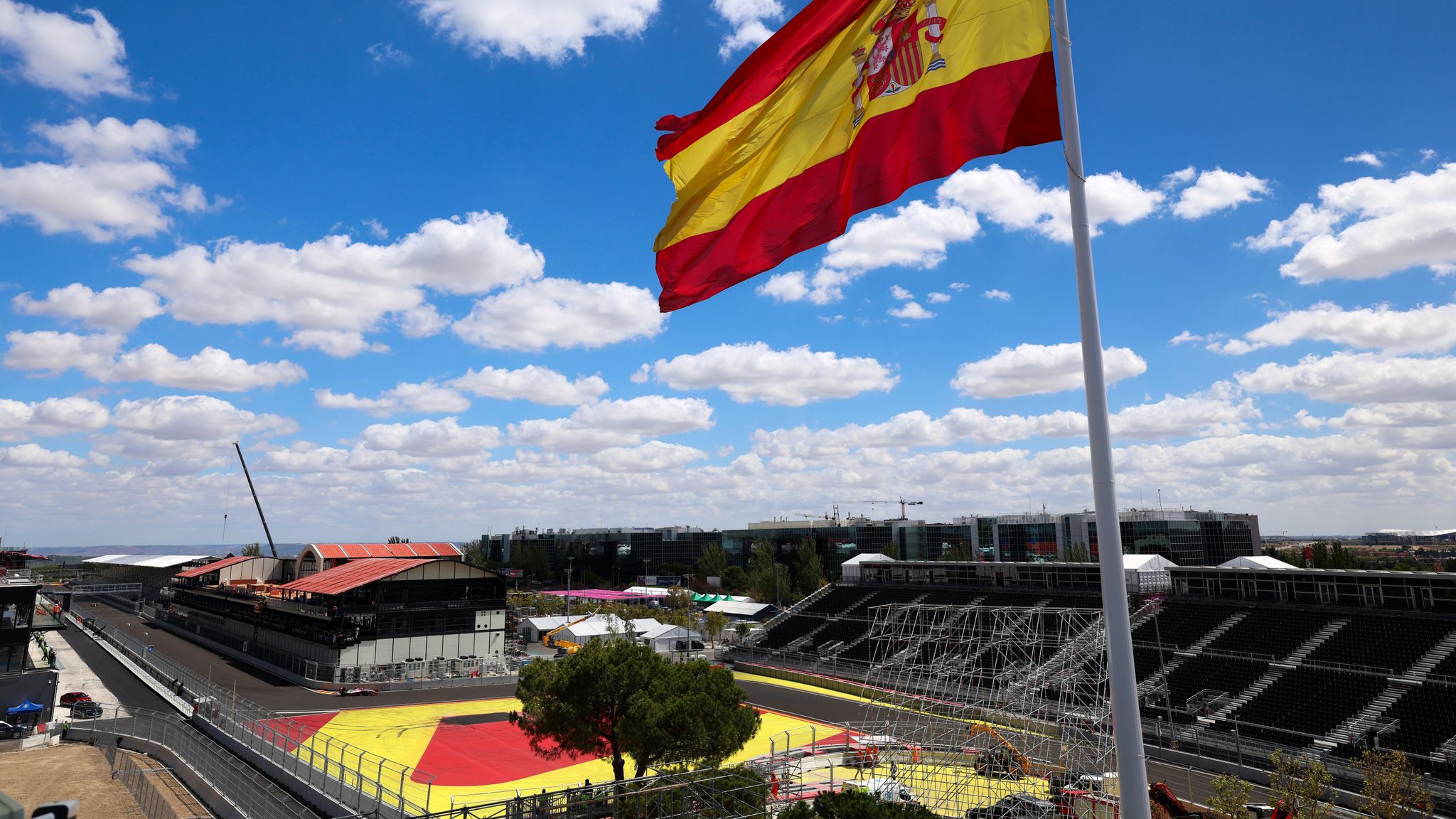
Formula 1 is preparing for an unprecedented challenge this weekend as the Spanish Grand Prix relocates to a brand-new street circuit in Madrid, with expectations running high that the Madring will deliver chaos and push drivers to their absolute limits.
The race has departed from its traditional home at the Barcelona circuit to make way for a high-speed urban layout that has already earned a fearsome reputation. Formula 3 drivers who tested the venue last month described it as
Jeddah on steroids— a comparison that carries serious weight given that Jeddah itself ranks among F1's most demanding circuits.
The Madring circuit has been declared ready for its first Formula 1 Spanish Grand Prix following two days of Formula 3 testing that included several red flags from cars going off track. The 2026 Spanish Grand Prix weekend is now officially scheduled for 11–13 September 2026, with the race at Madring set for Sunday 13 September.
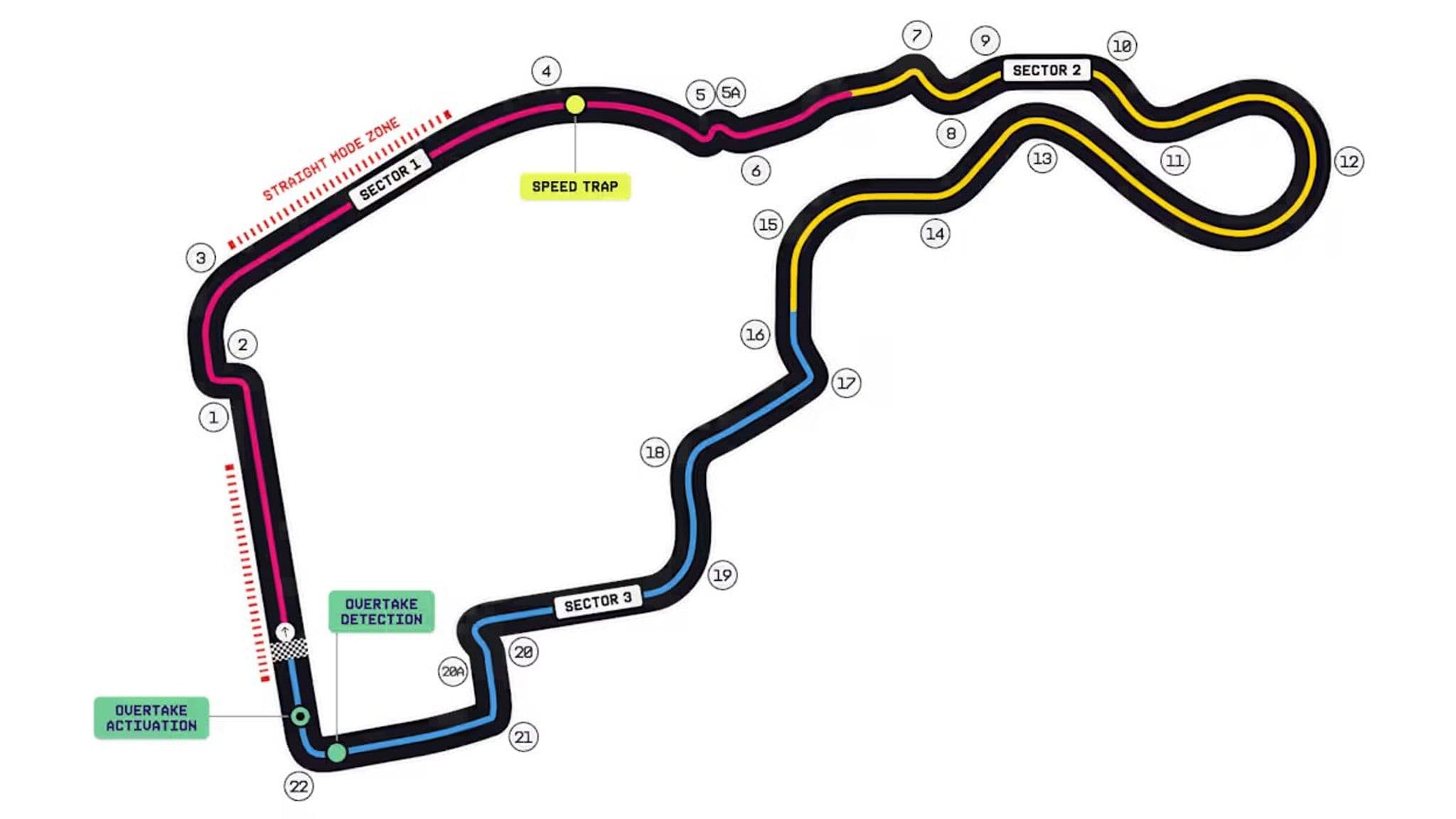
Navigating the 3.365-mile challenge
The circuit features 22 official corners, though the unusual layout includes Turns 5A and 20A, bringing the total to 24 distinct turning points. What makes this track particularly demanding is the scarcity of genuine straights — drivers will find themselves constantly working the steering wheel throughout a lap.
The opening sequence presents a left-right chicane at Turns 1 and 2, one of the few genuine overtaking opportunities thanks to a heavy braking zone that precedes a long acceleration through Turns 3 and 4. Beyond that lies what may prove to be the most treacherous chicane in F1 since the notorious Singapore Sling section that operated at Marina Bay between 2008 and 2012.
The critical decision point arrives at Turn 5, where drivers must judge precisely how much speed and kerb they can exploit. Should two cars arrive side by side at this chicane, the mathematics become impossible — there simply isn't room for both vehicles to thread through together. Yet the flat-out zone preceding the corner will tempt drivers to attempt overtakes regardless.
The track then climbs and descends into a particularly tricky uphill braking zone at Turn 7, where the outside barriers may claim glancing blows from drivers pushing the limits. The layout then veers left, right and left again, sections that should be flat-out during qualifying once sufficient rubber has been laid down from practice sessions.
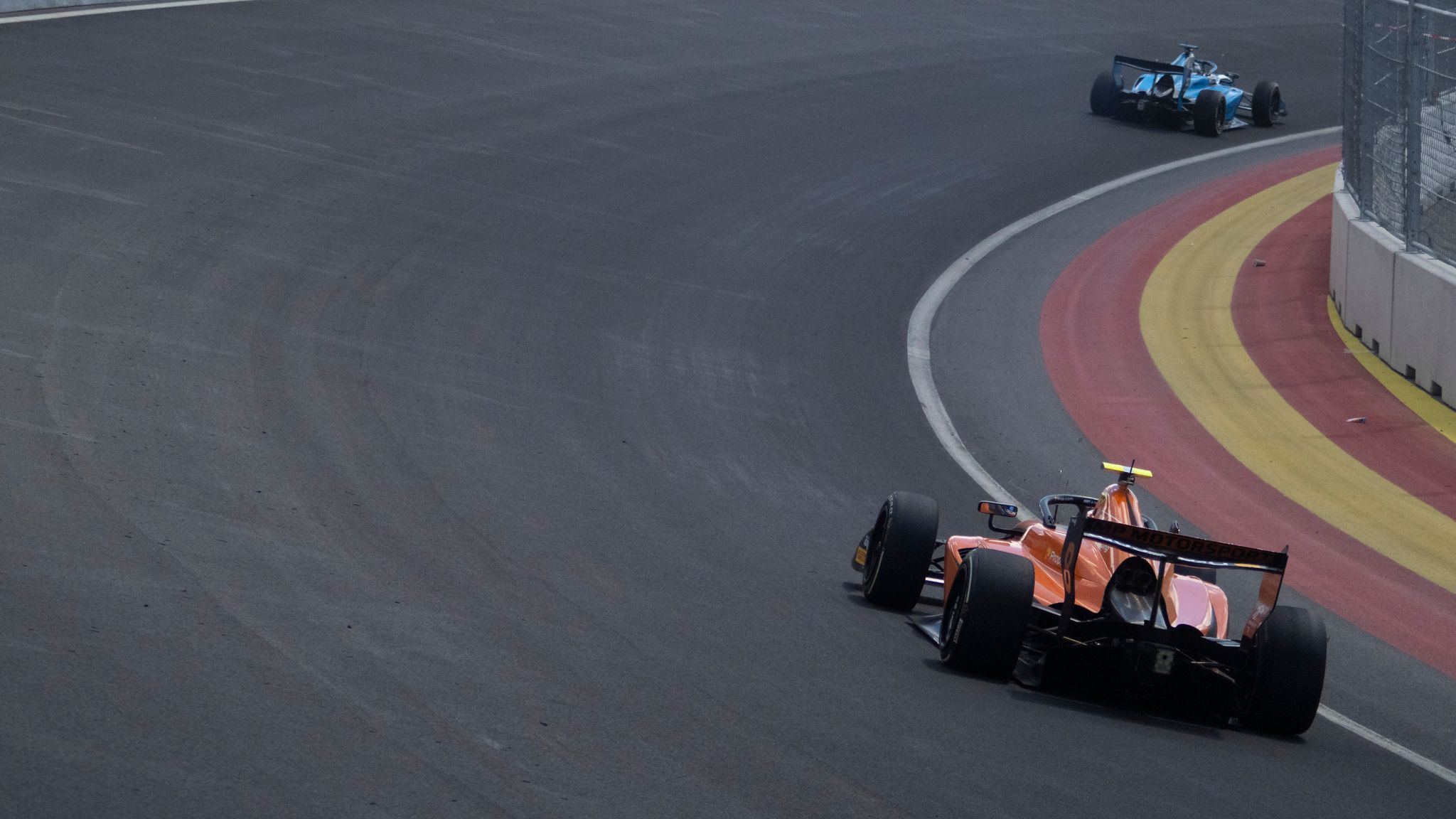
Turn 12, designated La Monumental, could become the circuit's defining feature. This enormous banked corner executes a 180-degree turn at a 24 per cent gradient — equivalent to 13.5 degrees — where drivers will attempt to maintain throttle application while enduring massive G-forces. After a left-hand flick at Turn 13, the following corners should remain flat-out until drivers encounter a 90-degree right-hander at Turn 17.
Turns 18 and 19 demand high-speed precision before drivers brake hard into the sharp left-hander at Turn 20. The final corner, Turn 22, is a 90-degree right-hander where inward-jutting inside barriers demand careful apex management as drivers accelerate onto the main straight to complete a lap that should consume approximately 90 seconds during qualifying.
What the drivers have revealed
Only three drivers possess any experience of the Madring layout: Ferrari's Lewis Hamilton and Charles Leclerc, plus Williams' Carlos Sainz. Sainz holds the position of Madring ambassador and contributed input on the Turn 12 La Monumental banking to ensure the designers could maintain both safety and uniqueness.
Leclerc expressed enthusiasm about the corner's potential, saying:
It's a very, very special corner. It's a corner where I feel in qualifying, we'll have to, I will say it in a polite way, but we'll have to be very brave because it's going to be on the limit. And so that's going to be really cool, I think. It's going to be a really cool corner. I do believe it can become one of the most iconic corners of the season, especially once the grandstand will be built. I think that will add also to the experience of that corner.
Both Leclerc and Hamilton conducted a filming day in July when the track had only recently completed construction, meaning conditions were extremely hot and dusty. Hamilton reflected on that experience:
As you would expect, there was no grip. So your tyres were basically just covered in dust, and that's the whole time.He added:
It looks like it will be a qualifying lap sort of circuit, and there's not really any straights. So it looks like a difficult place to overtake.
Throughout much of the circuit, even minor deviations from the racing line — whether through mistimed turns or carrying excessive speed — will send drivers directly into the barriers at high velocity. The risk-versus-reward calculation becomes extraordinarily high, and only the bravest drivers who execute perfectly will emerge victorious.
Sainz assessed the challenge comprehensively:
I think definitely with the way they've put the barriers and the design of the track it's going to be one of the biggest challenges in Formula 1 recently. The track reminds me a lot of Jeddah, it reminds me a lot of Baku, even reminds me a bit of Macau in some ways. So having that in an F1 [car] with 1,000 horsepower is going to be quite an interesting challenge, so let's see how it goes.
Expecting chaos and interruptions
Safety car deployments and red flags appear virtually inevitable. The fundamental difficulty of the circuit makes the question not whether these interruptions will occur, but rather how many will materialise across practice, qualifying and the race. Should barrier repairs become necessary following crashes — as happened at the Italian Grand Prix — red flags will definitely be required.
The two-day Formula 3 test produced 19 red flags, though not all resulted from crashes. Sainz acknowledged the likelihood:
Looking at the track and hearing of what happened in the F3 test, I think we are all expecting safety cars, red flags and yellow flags in qualy and things like this.
Sainz noted that Formula 1 has recently gravitated towards street circuits closer to city centres, citing Jeddah, Baku and Miami as examples.
They have more walls and we haven't had any issues with it. The races actually seem to be going quite well to every place we've gone, so it's that similar trend we're going towards.
Predicting which team will dominate proves nearly impossible, though the circuit's corner-heavy nature should favour cars demonstrating particular strength through technical sections — comparable to what unfolded at the Hungaroring and Zandvoort, where McLaren's Lando Norris secured victory.
McLaren and Ferrari will be eager to reclaim momentum from Mercedes and Kimi Antonelli following the Italian's impressive triumph at Monza. The circuit will host the Madrid Formula 1 Grand Prix for 10 years from 2026, making this a long-term commitment rather than a temporary arrangement.
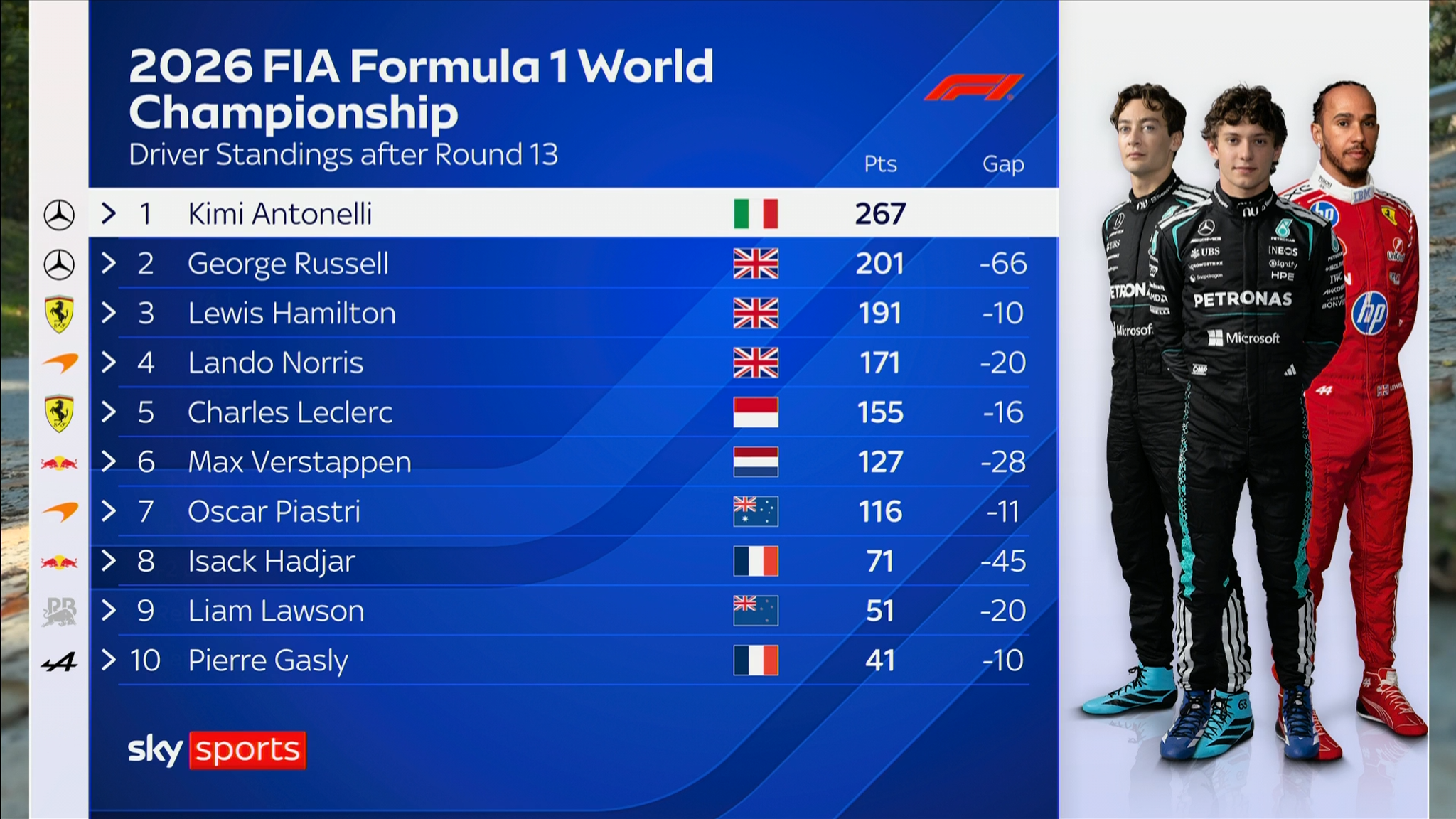
For the title contenders, avoiding a qualifying or race-ending crash this weekend will prove absolutely pivotal. Every driver understands that F1 demands pushing limits, yet the Madring will punish those who misjudge their aggression. This track will bite hard, and it will bite without mercy.
Weekend schedule and what comes next
The next on-track F1 session is Practice 3 on Saturday 12 September, followed by qualifying later that day and the race on Sunday 13 September. Friday 11 September features Practice 1 and Practice 2, with the full weekend broadcast live on Sky Sports F1.
Thursday 10 September begins with the Drivers' Press Conference at 2pm, followed by Paddock Uncut at 5pm. Friday's schedule includes F3 Practice at 10am, F2 Practice at 10am, Spanish Grand Prix Practice One at 12pm (session starts at 11.30am), F2 Qualifying at 12.55pm, Team Bosses' Press Conference at 2.40pm, Spanish Grand Prix Practice Two at 3.45pm (session starts at 3pm), F3 Qualifying at 5.20pm, and The F1 Show at 6.20pm.
Saturday 12 September features F3 Sprint at 10am, Spanish Grand Prix Practice Three at 11am (session starts at 11.30am), F2 Sprint at 1.10pm, Spanish Grand Prix Qualifying build-up at 2.15pm, Spanish Grand Prix Qualifying at 3pm, F3 Feature Race 1 at 4.55pm, and Ted's Qualifying Notebook at 6pm.
Sunday 13 September begins with F3 Feature Race 2 at 8.40am, F2 Feature Race at 10.20am, Grand Prix Sunday build-up at 12.30pm, The Spanish Grand Prix at 2pm, Chequered Flag reaction at 4pm, and Ted's Notebook at 5pm. Every session will be available live on Sky Sports F1, with streaming available through NOW with no contract required.