Mercedes may struggle to maintain their championship advantage after prioritising early-season performance through front-loaded development of their 2026 car, according to Sky Sports F1 strategist Bernie Collins.
The Silver Arrows enjoyed a commanding opening to the campaign following the arrival of fresh chassis and power unit regulations. Kimi Antonelli claimed five consecutive victories to establish a commanding position in the Drivers' Championship, following George Russell's triumph in the season-opener.
Yet the team's form has deteriorated markedly since then. Mercedes have secured only two victories across the subsequent six races, whilst Ferrari and McLaren have each claimed two wins during that same period, with upgrades proving decisive in shifting the competitive balance.
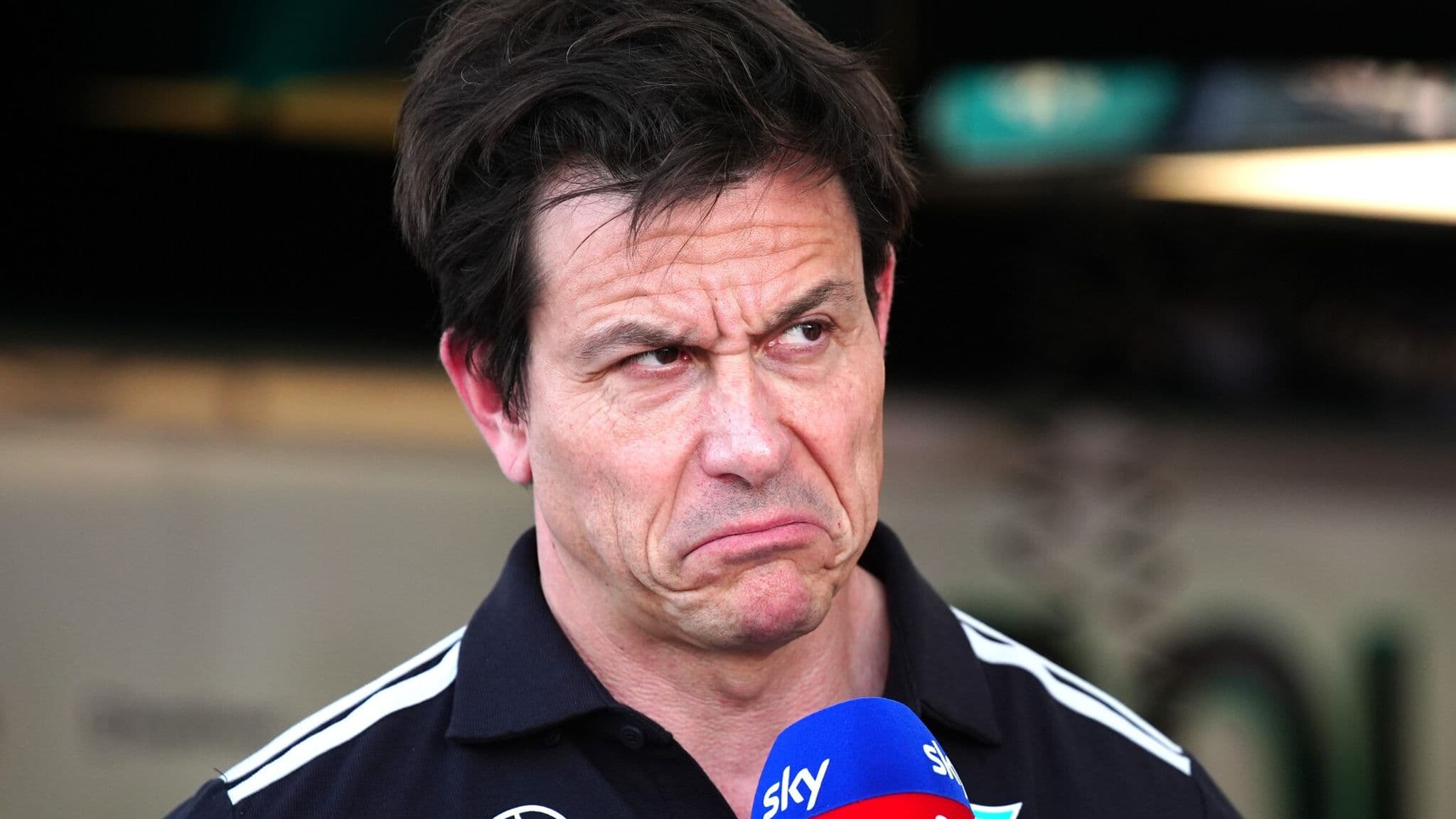
Lando Norris' commanding performances for McLaren at the last two rounds—either side of the summer shutdown—at Hungary and the Netherlands have signalled a potential momentum shift. That impression intensified when Mercedes team principal Toto Wolff stated after Sunday's race that his outfit
"haven't got the money"to replicate the upgrade programmes being deployed by their rivals.
Collins, who previously held the position of head of strategy at Aston Martin, examined Wolff's remarks and the predicament now confronting Mercedes during the latest edition of Sky Sports' The F1 Show podcast.
"Mercedes have front-loaded it and that shows a confidence in their power unit and their overall chassis design,"Collins explained.
"We had it for so many years at Force India, having a good reliable car for early-season races before people got on top of their reliability is where we scored all our points."
"For many years we got our strong position in the championship just in the first six races by finishing the race in a reasonable position. So, the front-loading it bit, I get."
Whilst Ferrari and McLaren have introduced substantial upgrade packages at regular intervals, Mercedes' most significant development package since May's Canadian Grand Prix remains scheduled for the rescheduled Bahrain Grand Prix in Malaysia between October 2-4. Before that venue, the calendar includes races in Italy, Spain and Azerbaijan.
According to Racing News 365, Antonelli currently sits atop the Drivers' Championship with 242 points, holding a commanding advantage over Russell on 183 points. Ferrari's Lewis Hamilton occupies third position, whilst an in-form Norris trails by 83 points in fourth. In the Constructors' Championship, Mercedes maintain an 87-point buffer over Ferrari, though McLaren remain 162 points adrift.
Collins went on to assess the strategic implications of Mercedes' approach.
"Where the money lies, who knows? What the team bosses say to us is often not [the truth]. Maybe Wolff is counting the Mercedes upgrade that is coming to Malaysia [within his calculations]."
"Mercedes have sort of put their money on the front end. There are pros and cons to that."
"Getting the points on the board early when other people are struggling is the pro, but conversely, then you're not gathering the data and learning about the development for the next six months when other people are."
"They've put their decision-making one way, and it will be interesting to see if they can hold on."
According to Motorsport Week, Wolff has characterised Mercedes' development strategy as fundamentally
"strategic"in its timing, with the team carefully managing when modifications arrive throughout the season. This measured approach reflects the constraints the team faces, with Wolff previously stating that budget limitations prevent Mercedes from matching the upgrade frequency of McLaren and Ferrari.
Calendar uncertainty compounds strategic challenges
Collins highlighted that ongoing instability in the race schedule has introduced further complications for teams attempting to plan their development trajectories.
The Bahrain Grand Prix has been relocated to Malaysia after being postponed in April due to conflict in the Middle East. The Saudi Arabian Grand Prix, originally scheduled for April, was cancelled entirely. Uncertainty also surrounds whether Qatar (November 27-29) and Abu Dhabi (December 4-6) will proceed as planned, with European circuits on standby as potential replacements.
"An additional difficulty for the teams has been created by the calendar continuing to change with the ongoing situation in the Middle East,"Collins said.
"It's hard for teams to decide whether to put more emphasis on high-speed or low-speed corners, for example, because you don't know what the make-up of tracks going forward is."
"That's quite interesting, where they prioritise their upgrades in terms of overall car performance."
What happens next
Formula 1 returns to action at Monza for Ferrari's home race at the Italian Grand Prix on September 4-6, broadcast live on Sky Sports F1. The championship battle will intensify as Mercedes attempt to consolidate their lead before their next major upgrade package arrives in Malaysia.