
British Paralympics medallist insists on innocence after ban
British Paralympic medalist Daphne Schrager has stated that she has “never cheated” after she was handed a two-year ban for failing a drugs test. Schrager, a para-cyclist, won a silver medal for Great Britain during the 2024 Paralympics in Paris.
An out-of-competition drug test in April 2025 found that Schrager had tested positive for Ligandrol, a substance on the banned list that can increase muscle and bone mass. Schrager, who is from Malmesbury, has made it clear that she has never used banned substances and argued that exposure through environmental contamination was the reason for the positive test.
Two potential scenarios were presented, including a massage she had received at a gym, or at a shared residential address. However, a National Anti-Doping Panel tribunal determined that while Schrager had not deliberately used a banned substance, she had not demonstrated that it was an accidental environmental contamination.
JOIN US ON FACEBOOK! All the best sports news and much more on our dedicated Facebook page
Consequently, the 25-year-old was issued a two-year ban from competition, which has been backdated to commence from the date of her initial suspension on June 2, 2025, and will conclude on June 1, 2027. The two-year rather than the four-year ban does leave the possibility open for Schrager to potentially participate at the 2028 Paralympic Games in Los Angeles.
In a lengthy statement posted on Instagram, Schrager revealed she had commissioned hair and nail analysis in an attempt to prove her innocence - yet as the precise origin of the contamination could not be pinpointed, the ban was upheld.
"In June last year, I received news that turned my world upside down," she said.
"I had tested positive in an anti-doping test for a trace amount of Ligandrol, detected at 0.0006ng, resulting in my suspension from cycling since that time.
"I want to be very clear: I have never cheated, nor have I ever knowingly taken any banned substance. Facing the possibility of a four-year ban unless I could prove that the result was unintentional has been incredibly distressing."
The tribunal was told that Schrager firmly denied ever using prohibited substances and maintained that she had never deliberately breached the ADR. She provided testimony that the presence of Ligandrol was the result of environmental contamination rather than deliberate use, either through exposure at the gym she visited two days prior to her sample being collected, or alternatively, through environmental contamination within her shared home.
The Tribunal considered scientific evidence from a number of experts, alongside additional testimony. The experts were in agreement that inadvertent environmental contamination was responsible for the positive test, concluding that Schrager had not intentionally used Ligandrol.
The Tribunal was also convinced, on the balance of probabilities, that there was no recklessness in Schrager's attendance at the gym, but they observed that as Schrager had not established how Ligandrol entered her system, she had unintentionally committed anti-doping offences and thus imposed her two-year period of ineligibility.
"In cases like mine, by the time an athlete is informed of their positive test, too much time has passed to identify the exact source of contamination with the certainty that the rules demand," Schrager added.
"That is not a failure of honesty or effort, it is simply too much of a burden to be met in every case.
"This is one of the most difficult periods of my life. Losing my contract, my team and the structure that had long shaped my purpose and identity left me facing a level of uncertainty I had never known."
Schrager, who has cerebral palsy, described the impact on her mental health as "significant and at times overwhelming" - yet vowed to make her comeback in 2027.
She secured ParalympicsGB's first medal of the 2024 Games, claiming silver in the women's C1-3 3,000m individual pursuit.
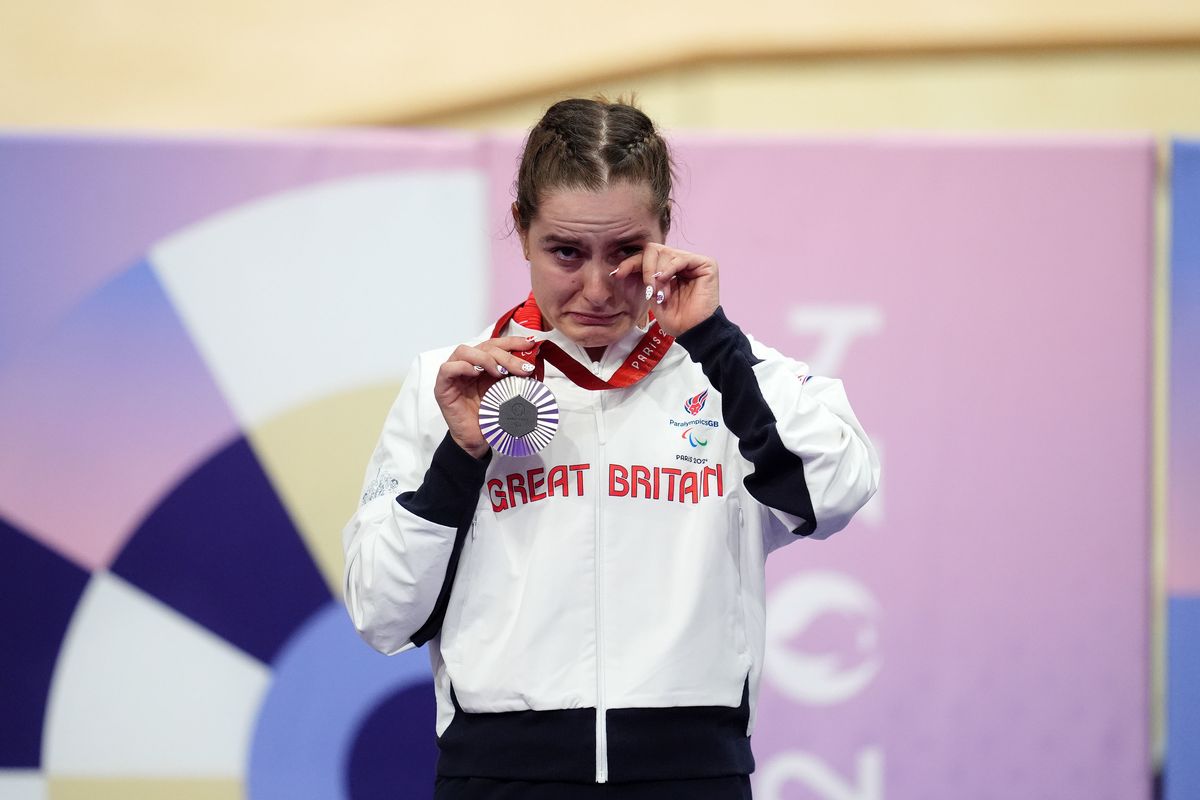
She later won two gold medals at the Para-cycling Road World Cup in May 2025 in the C2 class – before being suspended just a month later.
Schrager looks ahead to a comeback
Despite the tribunal’s findings and the two-year period of ineligibility, Schrager’s statement made clear that she intends to return to competition. With the ban running until June 1, 2027, the 25-year-old still has a pathway back to elite cycling and the chance to target the 2028 Paralympic Games in Los Angeles.
Her case also underlines the strict standards athletes must meet in anti-doping proceedings, even when panels accept that a prohibited substance was not taken deliberately. Schrager’s position remained that she had never cheated and that environmental contamination was to blame, but the tribunal ruled that she had not established the exact source of the Ligandrol detected at 0.0006ng.


