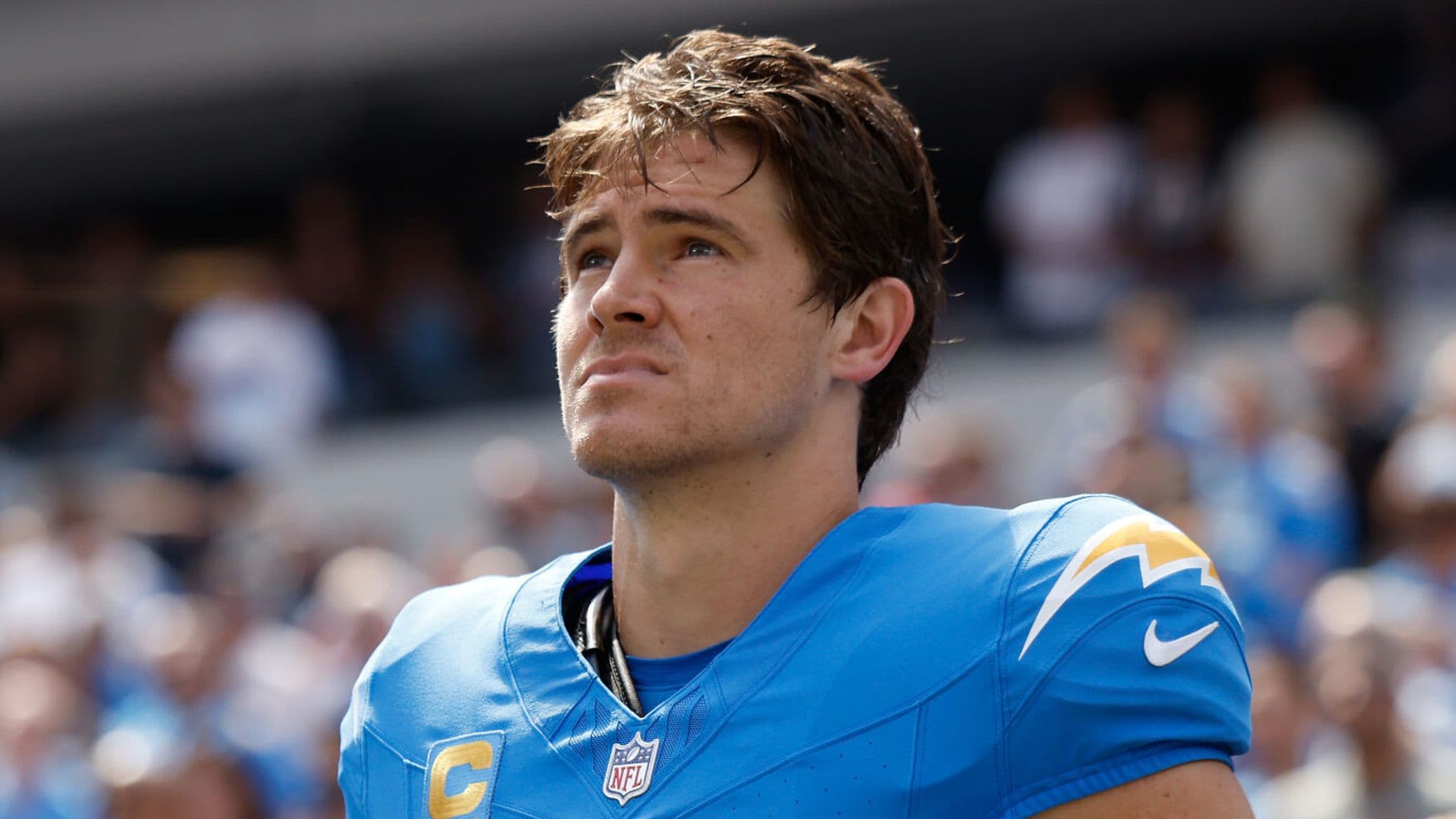
The modern sports lexicon has a term for what happened to Justin Herbert on Sunday: glazing. In NFL circles, it might be called Jim Harbaughing. Either way, the torrent of praise surrounding one of football's most talented yet polarising figures has created an intensity of scrutiny that few players can escape.
Herbert arrived at SoFi Stadium as the most visibly gifted quarterback on the field. He departed having been outmatched and outperformed by Jacoby Brissett, a veteran journeyman and the Arizona Cardinals' bridge quarterback, in a 26-14 opening weekend defeat that punctured—though hardly burst—the bubble around a Los Angeles team marketed as one of the AFC's most compelling playoff contenders heading into Week One.
Brissett and a disciplined Cardinals defence orchestrated the upset, leaving the Chargers to contemplate an all-too-familiar pattern: a disjointed, mistake-laden performance in which superior individual talent proved insufficient to overcome poor execution and self-inflicted wounds. Over-billed? Over-hyped? The season is young, but the questions are already mounting.
If you placed a neutral observer in a room, showed them highlight reels of the NFL's starting quarterbacks and asked them to identify the most feared, most dangerous arm in the league, many would point to Herbert. He possesses the prototype dimensions: a cannon arm, mobility, imposing frame, needle-threading accuracy and the capacity to launch deep balls with devastating velocity. Yet those same gifts fuel the frustration that has shadowed his career. When Herbert is at his best, he is genuinely spectacular—a match for any defence and one of football's most electrifying performers. His skillset has never been in doubt. What remains contested is his killer instinct and his standing among the NFL's elite decision-makers.
Herbert's final line on Sunday read 17 completions from 27 attempts for 209 yards, one touchdown and one interception. According to official Chargers statistics, he added 29 rushing yards on five carries, finishing with a passer rating of 83.72. The most damaging moment came with ten minutes remaining and the Chargers trailing by nine: Herbert forced a pass into double coverage downfield, resulting in the turnover that effectively sealed the defeat.
His afternoon had begun promisingly. He engineered an eight-play, 77-yard scoring drive that included three passes covering 60 yards to Ladd McConkey. That connection proved short-lived. McConkey exited with a chest injury after catching his touchdown pass before the end of the third quarter, and the Chargers' offensive rhythm collapsed entirely in his absence.
Without McConkey, Los Angeles managed only five possessions: punt, turnover on downs, interception, turnover on downs, turnover on downs. The offence failed to reach Arizona territory in four fourth-quarter drives. The team accumulated six penalties overall, five of them in the second half, including three consecutive infractions on their penultimate series. It was Chargers football at its most self-destructive.
The timing of the loss made it sting more sharply. Just days earlier, head coach Jim Harbaugh had issued a sweeping prediction about his quarterback's future.
Allow me to call my shot, like Babe Ruth pointing his bat over to centerfield: Justin Herbert, when it's all said and done, when his career comes to an end, I predict he will be known as the greatest, best ever to play the position of quarterback. When it's all said and done, and his career is finished, we're going to look back and say, 'Yep, that's the best that ever did it.'
Harbaugh has become Herbert's most vocal and relentless advocate since arriving as head coach in 2024, repeatedly championing his quarterback's potential for greatness and attempting, almost, to speak his excellence into existence. Yet such amplified expectations carry a cost. The spotlight has intensified, the fishbowl effect has deepened, and the margin for error has shrunk. Is there such a thing as excessive hype?
Context matters. Week One is a notoriously premature moment for panic. The Seattle Seahawks and New England Patriots both lost their opening games last season before reaching the Super Bowl. The Los Angeles Rams, widely favoured, fell to the San Francisco 49ers in Melbourne. Nobody wrote off those teams, and nobody should write off the Chargers. Seasons are not decided in Week One. Yet an inauspicious start has only amplified the questions already circling Herbert's career.
Much of the intrigue surrounding Herbert's 2026 campaign centres on the arrival of offensive coordinator Mike McDaniel, whose tenure as Miami Dolphins head coach ended disappointingly but whose offensive acumen is expected to unlock the best of his quarterback's otherworldly arm talent. McDaniel's Miami offence thrived on Tua Tagovailoa's quick-release passing concepts, heavy pre-snap motion and a dynamic rushing attack. Herbert will be asked to operate outside his comfort zone, and every quarterback-coordinator partnership requires time to develop. McDaniel, too, carries the burden of justifying his reputation as one of modern football's most influential offensive minds.
The running game offered no relief. Second-year back Omarion Hampton managed just 43 yards from 12 carries, averaging only 1.5 yards before contact behind an offensive line that surrendered three sacks. This represented a stark regression from the past two seasons under Greg Roman, whose run-heavy system had restored stability to the Chargers' attack. Without balance, the offence cannot function.
Herbert entered the season carrying the weight of previous injury-plagued campaigns. He was sacked 54 times in 2025, the second-most in the league, while the Chargers operated without two-time Pro Bowl left tackle Rashawn Slater for the entire year and lost Pro Bowl right tackle Joe Alt for 11 games. His cumulative total of 225 sacks and 615 hits entering 2026 represented the most absorbed by any quarterback since his selection sixth overall in 2020. Both Slater and Alt returned for Week One, yet interior line vulnerabilities persisted.
The statistical record has long suggested Herbert belongs among the NFL's elite. His 24,820 passing yards through his first six seasons rank second in NFL history, behind only Peyton Manning. He surpassed Manning for the most completions by a quarterback in his first six seasons. From 2020 to 2022, he set the record for consecutive 4,000-yard passing seasons with three straight, operating behind his most talented receiving corps: Keenan Allen, Mike Williams and Austin Ekeler. The gradual departure of that trio has left him working with McConkey, Quentin Johnston and tight end David Njoku as his primary targets.
Yet statistics tell only part of the story. The number that matters most to Chargers fans is playoff wins, which currently stands at zero across three postseason appearances. Herbert has fallen in the Wild Card round in three of the last four years. He witnessed the Chargers squander a 27-0 lead against Jacksonville in 2022, produced a career-worst 43.8 completion percentage and four interceptions against Houston in 2024, and threw for just 159 yards with no touchdowns while being sacked six times against New England last season.
According to Pro Football Focus, Herbert's overall grade after Week One stood at 53.5, with zero big-time throws and one turnover-worthy play registered. The assessment underscored a performance that fell well short of the standard his coach had just articulated.
There is something compelling about Herbert's trajectory: a player blessed with elite talent who has become one of the league's marquee faces without yet breaking through to sustained postseason success. The NFL, as a collective, is willing him forward, urging him to thrust himself among the perennial contenders. The league knows he possesses the capability. But performances like Sunday's should not occur. Year seven is underway, and the Justin Herbert narrative remains simultaneously captivating and impossible to predict.
What comes next
The Chargers will attempt to recover quickly. According to the official Chargers schedule, Los Angeles hosts the Las Vegas Raiders at SoFi Stadium on Sunday, September 20, 2026. The home game offers an immediate opportunity to reset and demonstrate that Week One was an aberration rather than a harbinger of the season to come.
Herbert and McDaniel will have two weeks to diagnose the offensive breakdowns, restore rhythm to the passing game and establish a functional running attack. The Raiders present a winnable matchup, but the margin for further stumbles is narrowing. The expectations Harbaugh has articulated demand results, and results demand consistency. Herbert has the talent. Whether he can harness it over a full season remains the central question hanging over the Chargers' 2026 campaign.