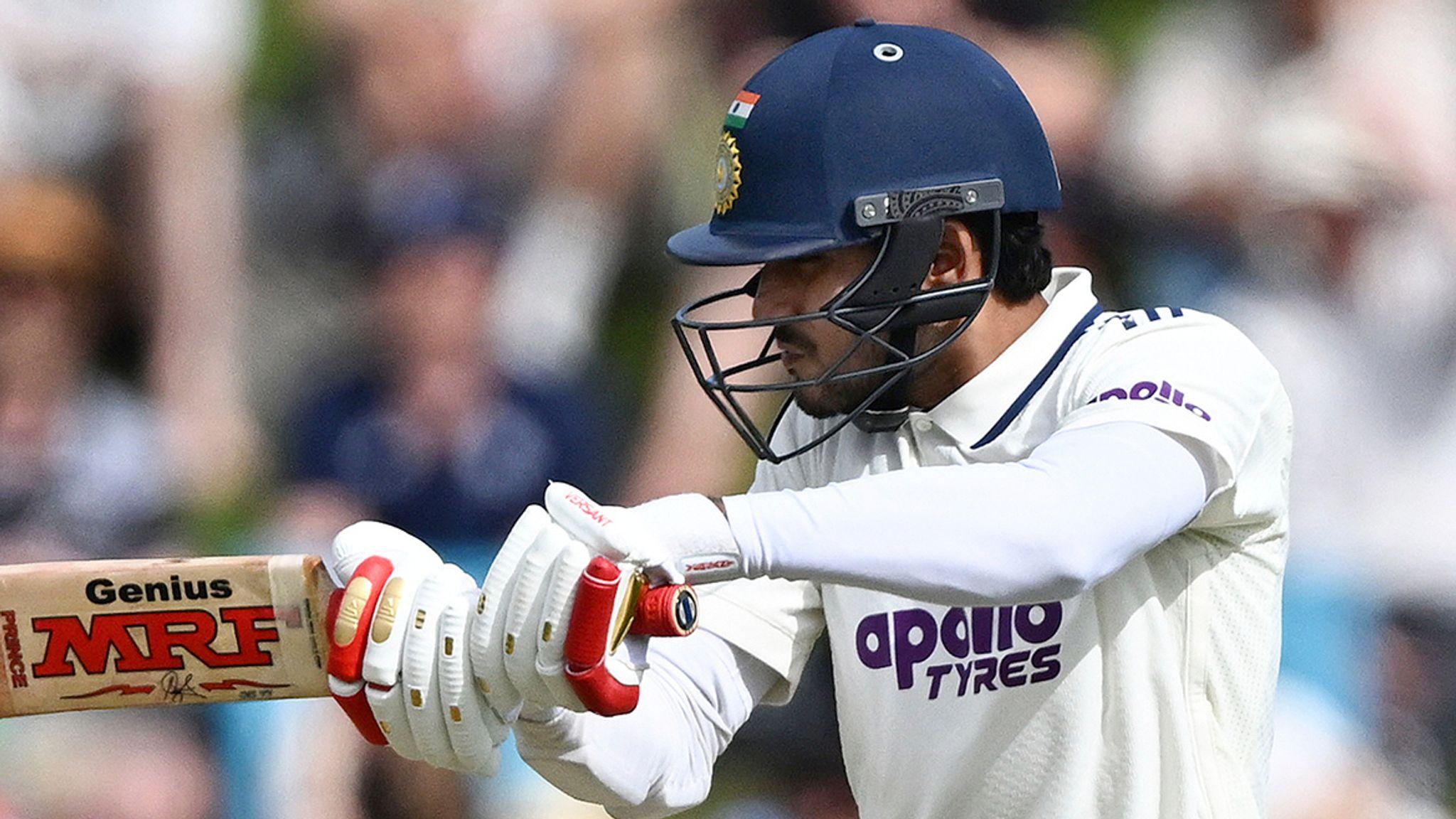
AB de Villiers has made fresh allegations that Australia's ball-tampering operation extended further back than previously acknowledged, insisting the misconduct began during the opening Test of their controversial 2018 tour of South Africa rather than emerging only later in the series.
The former South African batter, who played throughout the entire 2018 campaign, has now publicly endorsed the recent explosive claims made by Usman Khawaja and Cameron Bancroft, asserting that Australia's bowling unit possessed full knowledge of the tampering scheme. According to Sky Sports, de Villiers made these comments on his YouTube channel, AB de Villiers 360.
"It started in Durban, by the way, not in PE [Port Elizabeth]," de Villiers said. "And I'm very happy for people to quote me on that. We lost that first Test match in Durban with the ball reversing at a very, very interesting time. Way too early for anyone to reverse a ball at Kingsmead."
De Villiers drew on his extensive experience at the Kingsmead ground to underline his conviction.
"Trust me, I've played a lot of cricket there. So whatever they did there, whether it was sandpaper or a nail or I don't care. I honestly do not care. The fact of the matter is they were caught and everyone knew."
The former batter emphasised that the bowlers in particular must have recognised what was occurring, since the ball's behaviour defied natural progression.
"The bowlers in particular knew because the ball doesn't just reverse. It's not your first Test match for Australia. So just stand up and say, 'guys, we were wrong'."
De Villiers urged people to examine footage from the Durban Test, saying it left him with "absolutely no doubt" that the ball had been tampered with.
The controversy surrounding the 2018 tour was reignited in November following the release of Khawaja's autobiography, Sabr, in which the former opening batter revealed that every member of the Australian squad was aware that ball tampering was occurring. David Warner, Chadd Sayers and Bancroft all subsequently corroborated that assertion. However, Australian Test captain Pat Cummins vehemently rejected the allegations as
"100 per cent wrong"during an extraordinary press conference.
Darren Lehmann, who served as Australia's coach during the series, later told BBC Test Match Special:
"I did not know sandpaper was being used."
In 2021, bowlers Josh Hazlewood, Nathan Lyon, Mitchell Starc and Cummins issued a joint statement denying any involvement with sandpaper during the series, and Hazlewood has since criticised the
"pile on"against Cummins.
De Villiers: Every single person knew
De Villiers featured in all four Test matches during the 2018 series and was batting alongside Aiden Markram when Bancroft was captured by television cameras extracting a piece of sandpaper from his pocket during the third Test.

In Durban, De Villiers struck an unbeaten 71 in the first innings, helping South Africa to a 118-run victory. He then scored an unbeaten 126 in the second Test in Port Elizabeth. In the Cape Town Test where the sandpaper incident occurred, de Villiers scored 64 and 63 in South Africa's two innings.
De Villiers expressed bewilderment at the focus placed on the specific object used in the tampering.
"It's the weirdest thing because everyone's talking about the sandpaper now. Why are we all so worried about the object that was used?"
Instead, he stressed that the core issue was the deliberate nature of the transgression.
"The fact of the matter is there was a premeditated decision made to do something illegal on the ground. And every single person knew about it. I have zero per cent doubt about it."
De Villiers emphasised that the issue was not whether sandpaper specifically was used, but whether players had made a premeditated decision to do something illegal; he said he had "zero per cent doubt" every player knew about that decision.
De Villiers: Cricket Australia must take responsibility
Cummins has faced mounting scrutiny over his position as Australia's Test captain in the aftermath of Khawaja and Bancroft's revelations. Cricket Australia has responded by throwing its
"unanimous support"behind the fast bowler.
Cricket Australia has ruled out reopening an investigation into the scandal, but has instead established an independent forum inviting former players to share their recollections of the events without fear of punishment.
"We believe this is in the best interests of the game,"Cricket Australia chief executive Todd Greenberg stated.
"For almost a decade, the fallout from those events has remained part of the conversation around Australian cricket."
Following Cricket Australia's initial investigation, Warner and Steve Smith received 12-month bans for ball tampering, while Bancroft was handed a nine-month suspension. De Villiers contended that these punishments were disproportionate.
De Villiers argued that the team had thrown those three players
"under the bus",describing it as
"absolutely ridiculous"how they
"took the hit"and insisted their punishments were
"too much"."
After Khawaja's autobiography was published, Cricket Australia released a statement saying it remained
"comfortable with the findings of our integrity process."The statement read:
"There has been a great deal of speculation in the eight years since the 2018 Cape Town Test, including extensive media coverage throughout last month's series in South Africa. During this time there has been the ongoing opportunity to present any relevant information, and this remains the case. All relevant information presented to CA to date has been properly considered and we remain comfortable with the findings of our integrity process."
However, De Villiers believes the governing body bears primary responsibility for the saga.
"I think Cricket Australia need to take the blame and not so much the players because they didn't deal with it in the right manner,"he said.
De Villiers elaborated on his position:
"It should have been dealt with a lot better by the guys at the top, not the players. The players obviously panicked. They were emotional, in the middle of a series, in the middle of a Test match. They had no idea how to deal with it. I just feel they should have stuck together as a unit. They threw the guys under the bus and forced a situation like this to pop up again eight years later."
De Villiers said he had sympathy for those involved and argued they had "thrown the guys under the bus," prompting the scandal to resurface eight years later.
Strauss backs Cummins, calls for perspective
Former England captain Sir Andrew Strauss has broken his silence on the sandpaper revelations and offered his backing to Australia Test captain Pat Cummins.
In a post on LinkedIn, Strauss acknowledged that
"it is time to let go"but added that
"the truth was always going to come out eventually."
"I cannot help feeling that it is time for everyone to get off their high horse,"Strauss wrote.
"For all the wrongs committed in Australian cricket, plenty of people seem rather too happy to jump on the bandwagon and revel in the soap opera. This all happened a long time ago. Punishments were handed out, reputations suffered and, one hopes, lessons were learnt."
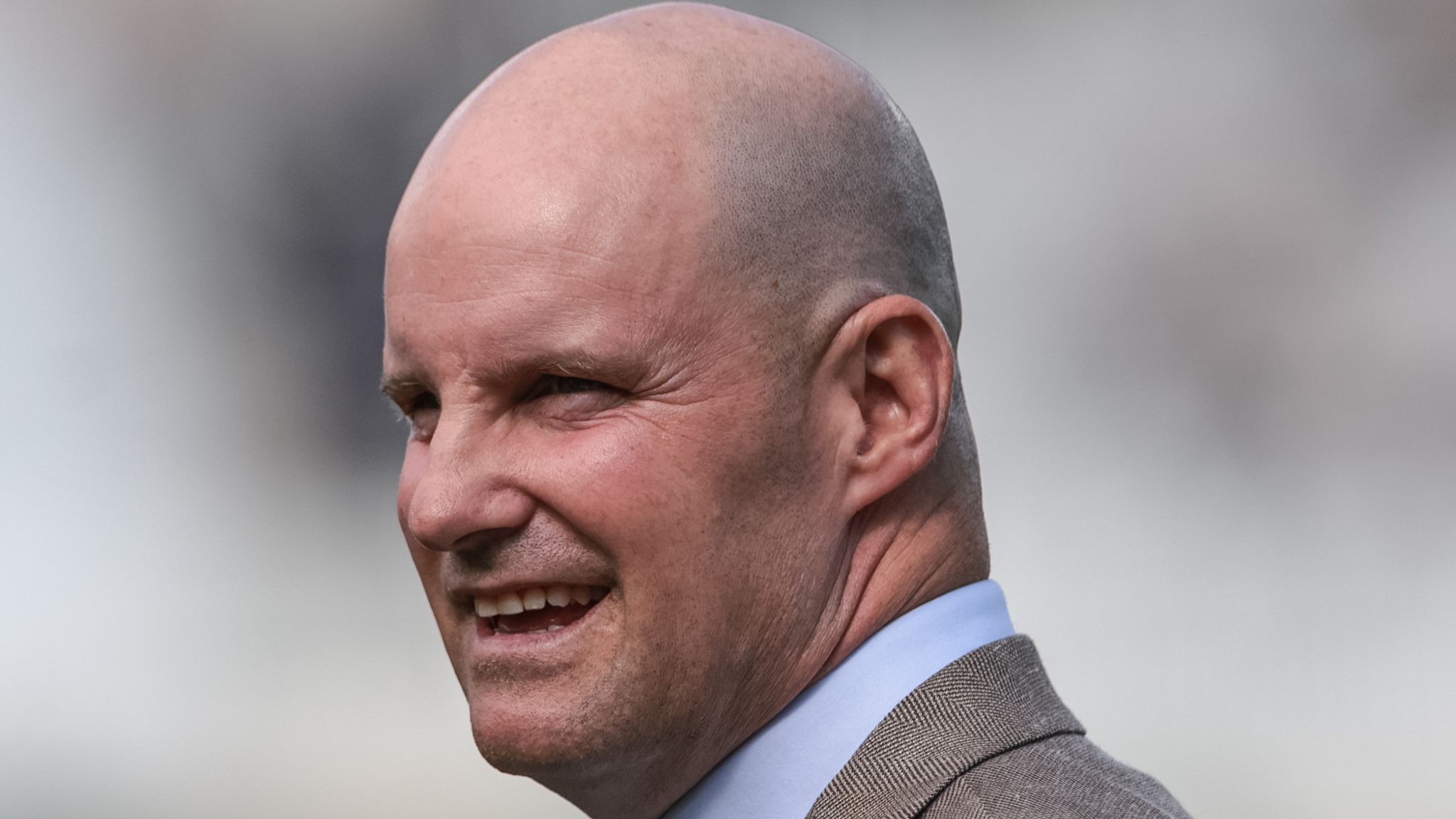
Strauss expressed concern about the culture of judgment that has surrounded the scandal.
"We seem increasingly prone to expressing mock outrage whenever someone does something wrong, all too eager to pass judgement from a position of sanctimonious righteousness. There is a place for accountability, but there should also be room for perspective, forgiveness and moving on."
"Cummins should not be made to carry the can for the actions of a previous regime. At some point, we have to draw a line under the past and move forward."
In his fuller statement, Strauss acknowledged that he had largely avoided commenting on the latest developments from his base in Hong Kong, yet found the scandal impossible to ignore.
"Being based in Hong Kong, I have largely resisted the temptation to get involved in the latest developments and allegations the infamous 'Sandpapergate' scandal. Yet, somehow, it refuses to go away."
Strauss identified several aspects of the affair that continued to trouble him.
"There was always an uncomfortable whiff of a cover-up surrounding the original investigation. It is difficult to believe that the wider team had no knowledge of a plan to use artificial substances to generate reverse swing. The suggestion that certain players, particularly the bowlers, were entirely unaware of what was going on was never especially convincing."
While Strauss expressed admiration for Smith, Bancroft and Warner's willingness to accept responsibility, he drew a distinction between accepting punishment and revealing the complete truth.
"I have always admired Steve Smith, Cameron Bancroft and David Warner for taking responsibility, but there is a difference between accepting punishment and telling the whole truth. Ultimately, the truth has a habit of coming out, however long it takes."
Strauss suggested that Khawaja's decision to revisit the scandal in his autobiography carried consequences.
"That said, Usman Khawaja will probably be off a few Christmas card lists this year. Whatever the merits of his revelations, he must have known that revisiting the saga in his autobiography would provoke a reaction. Perhaps there was an element of settling old scores, but bringing Pat Cummins and members of the coaching staff at the time back into the controversy feels somewhat petty and self-serving."
However, Strauss maintained that uncomfortable questions remained valid.
"That is not to say that uncomfortable questions should not be asked, but some perspective is needed. Steve Smith and Darren Lehmann, among others, have already paid a substantial reputational price for what happened. There is a difference between seeking accountability and continually reopening old wounds."
Strauss reflected on the broader principles governing elite sport.
"More fundamentally, elite sport is about winning, but it is also about how you win. The rewards and scrutiny that come with elite sport have never been greater. Win and you are heroes; lose and you are villains. The temptation to push the boundaries, and occasionally cross them, is therefore considerable."
"This is precisely why captains and coaches have to judge themselves and their teams by something more than the scoreboard. Winning is the currency of elite sport, and without it, longevity is difficult. But the strongest organisations also have a clear sense of identity and standards. They understand that how things are done matters just as much as the results they achieve. As the saying goes, if you don't stand for something, you will fall for anything."