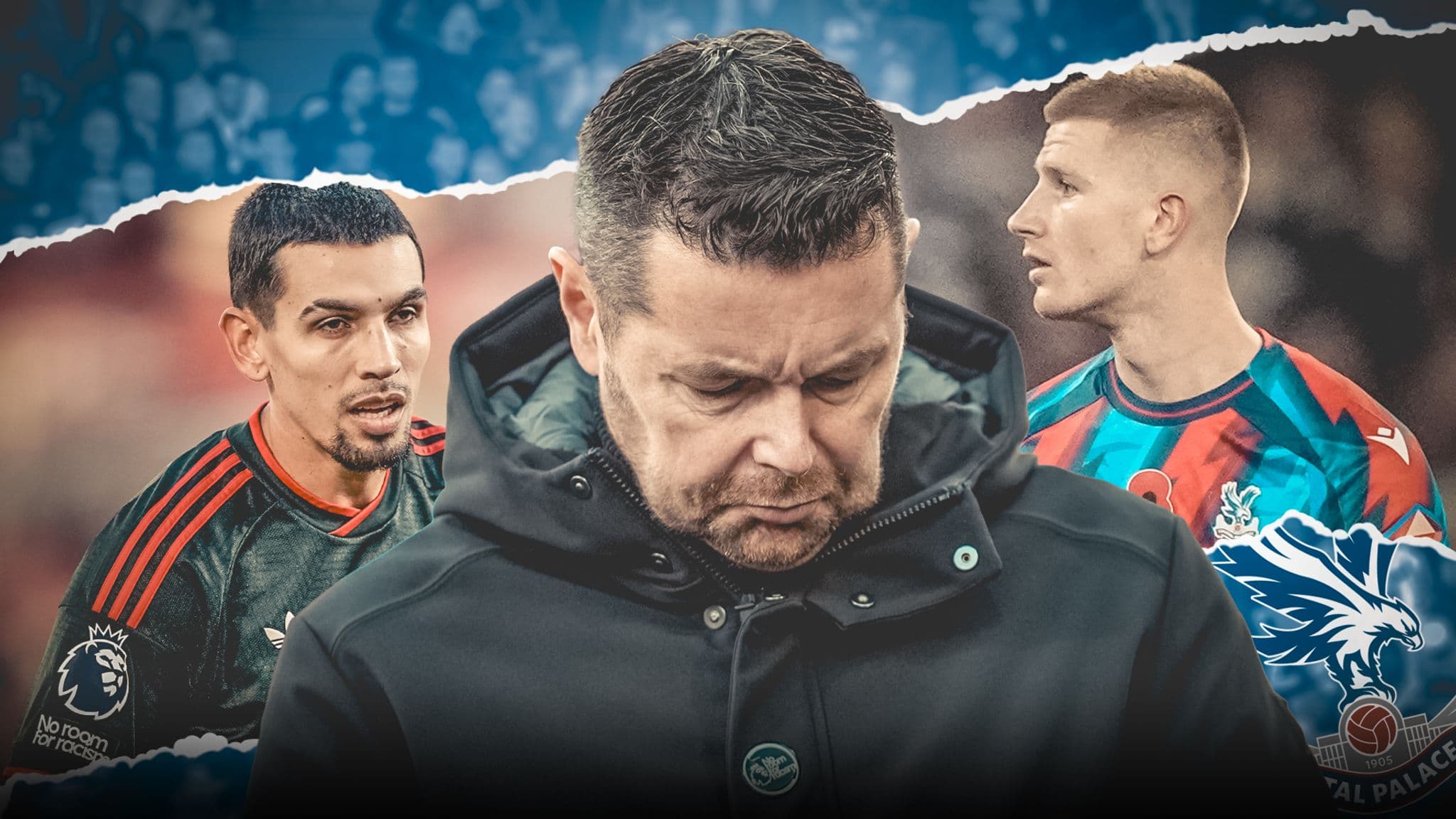
When Pierre Sage lifted the Coupe de France trophy as RC Lens manager last May, he paused to reflect on what he had achieved. Turning to his coaching staff in that moment of triumph, he asked: "Do you realise where we are?"
The accomplishment was remarkable. In his first season at Lens, Sage had delivered the club's maiden French Cup title while steering them to second place in Ligue 1—their joint-best league finish in over two decades. With just 56 professional games under his belt before arriving at the club, he had become French football's brightest prospect almost overnight. According to Sky Sports, the 47-year-old was briefly on Liverpool's radar during the summer transfer window, a testament to the regard in which he was held.
Now, less than six months later, Sage may wish he had savoured that moment longer. Since taking the Crystal Palace job in July, the manager has overseen a spectacular collapse. The Eagles sit in the relegation zone with the division's worst defence, and Sage has become second-favourite among bookmakers to be the next Premier League manager sacked. A defeat to Liverpool on Sunday could see Palace drop to the bottom of the table.
The deterioration has been startling. Palace have lost their last three league matches without scoring, conceding nine goals in the process. After falling two goals behind at Tottenham on Saturday evening, Sage did not mince words about the state of his team.
"It's a disaster," he told Sky Sports.
Yet even as the Eagles struggled against Spurs, the away supporters did not direct their ire at the manager. The fans understand, as Sage now does, that he has inherited a fractured squad with problems that run far deeper than any individual's tactical acumen.
The damage inflicted by summer departures has been substantial. The loss of Daniel Munoz and Maxence Lacroix—two of the club's most important defenders—has left gaping holes that their replacements have failed to fill. Anan Khalaili, Munoz's successor, is creating chances at barely half the rate of the Colombian. Loanee centre-back Axel Disasi has won only 54 per cent of his aerial duels, unable to match Lacroix's dominance, and this defensive fragility has contributed to Palace conceding five goals from set-pieces already—a record surpassed only by his parent club Chelsea.
The absence of Ismaila Sarr has proven equally damaging. The winger's 21-goal haul last season made him Palace's most productive attacking outlet, but a recurrence of his groin injury has sidelined him for much of Sage's tenure. When Sarr was unavailable last season, Palace's league goal output plummeted to just 0.71 per game. Under Sage, both Sarr and Jean-Philippe Mateta—who scored 12 league goals last season—have managed only 183 combined league minutes from a possible 1,170.
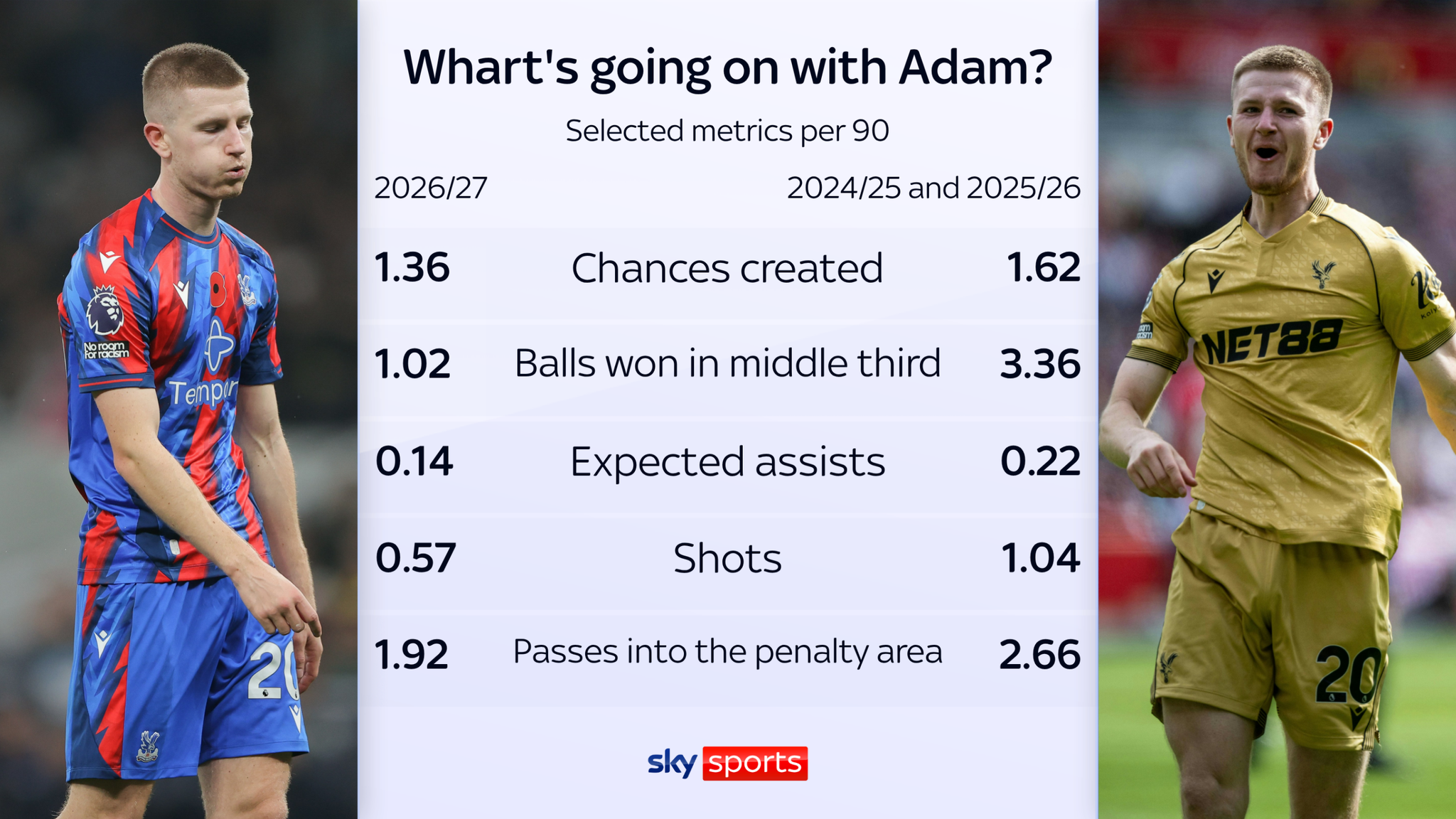
Adam Wharton, who should be Palace's standout performer regardless of circumstances, has suffered a sharp decline in form over three months. The 22-year-old's ball-winning rate in the middle third has collapsed from over three times per game across the previous two seasons to barely above one. Before the Hoffenheim match, Sage said Palace had played eight matches in 25 days and were working to improve their attacks through the opposition's defensive line.
The structural issues facing Palace run deeper still. Director of football Matt Hobbs has overseen a wholesale squad overhaul across the past two years, with Eberechi Eze, Marc Guehi, Munoz, Lacroix and Michael Olise all departing. While Brighton have thrived despite losing their best players, Palace's recruitment has largely failed to replace departing talent. Jeremy Pino is the only significant arrival who has come close to matching his predecessor's contribution.
Guehi's sale to Manchester City in January 2025, made without a replacement, proved particularly costly. Oliver Glasner's Palace conceded 26 goals in their remaining 16 games that season—a rate even more porous than this campaign's defensive record. A rebuild was clearly necessary, and the funds raised from Guehi and Eze sales provided the resources to attempt one. Yet Hobbs' first real test since succeeding Dougie Freedman has yielded mixed results at best.
There is also a fundamental tactical mismatch between Sage's philosophy and the squad he has inherited. The manager's beliefs remain unchanged from his Lens days. When asked about Palace's leaky defence following their defeat to Newcastle, he replied:
"My idea is that the best way of defending is to have the ball, because then you cannot concede."
This approach demands possession-based football built on opposition-half pressure and rapid transitions. At Lens, Sage's 3-4-2-1 formation produced the second-most high turnovers ending in a shot across Europe's top five leagues. Yet Palace have become a counter-attacking unit, and under Sage they have won the possession battle just twice. Only two other Premier League sides have seen less of the ball. Keeping possession as Sage would prefer is not their forte, and their defensive record is paying the price.
Palace managed 42 per cent possession or less in 19 games during the 2025-26 season, yet contributed seven of the club's 11 wins from those matches. The Eagles' identity was built on controlled chaos and rapid breaks, not the sustained pressure Sage demands. No team in the Premier League has managed fewer high turnovers ending in shots than Sage's Palace this season.
The manager's demands sit closer to those of Andoni Iraola, the Bournemouth boss whom Palace pursued extensively during the summer before he joined Liverpool. Ironically, Iraola's Bournemouth side were also stylistically far removed from the Eagles' traditional approach.
Recent developments have offered Sage some respite. Crystal Palace drew 1-1 with Hoffenheim on 5 November after Daichi Kamada scored a stoppage-time equaliser, with Adam Wharton sent off, easing pressure on Pierre Sage. The draw provided a temporary reprieve, though the underlying issues remain unresolved.
Looking ahead, Sage faces a critical period. Before the Hoffenheim match, Sage indicated that Quinten Timber and Jorgen Strand Larsen were ready to play, while Takehiro Tomiyasu was not expected back before the November international break, with Ismaila Sarr managing a groin problem. The injury situation remains fluid, and squad depth is limited.
Sage is undoubtedly a talented coach—his Lens record of a 67.5 per cent win rate across all competitions and a six-place, 18-point improvement in Ligue 1 demonstrated his capabilities. Yet the question now is whether he is the right fit at the wrong time, or whether Palace simply lack the infrastructure and playing style to accommodate his demands.
Should Palace's poor form persist and his position become untenable, it may not be because Sage is the wrong man for the club. Rather, it could be that Palace are not the right club for him.
What happens next
Crystal Palace are scheduled to host Liverpool in the Premier League on Sunday, 8 November, in a fixture that could define Sage's immediate future at Selhurst Park.