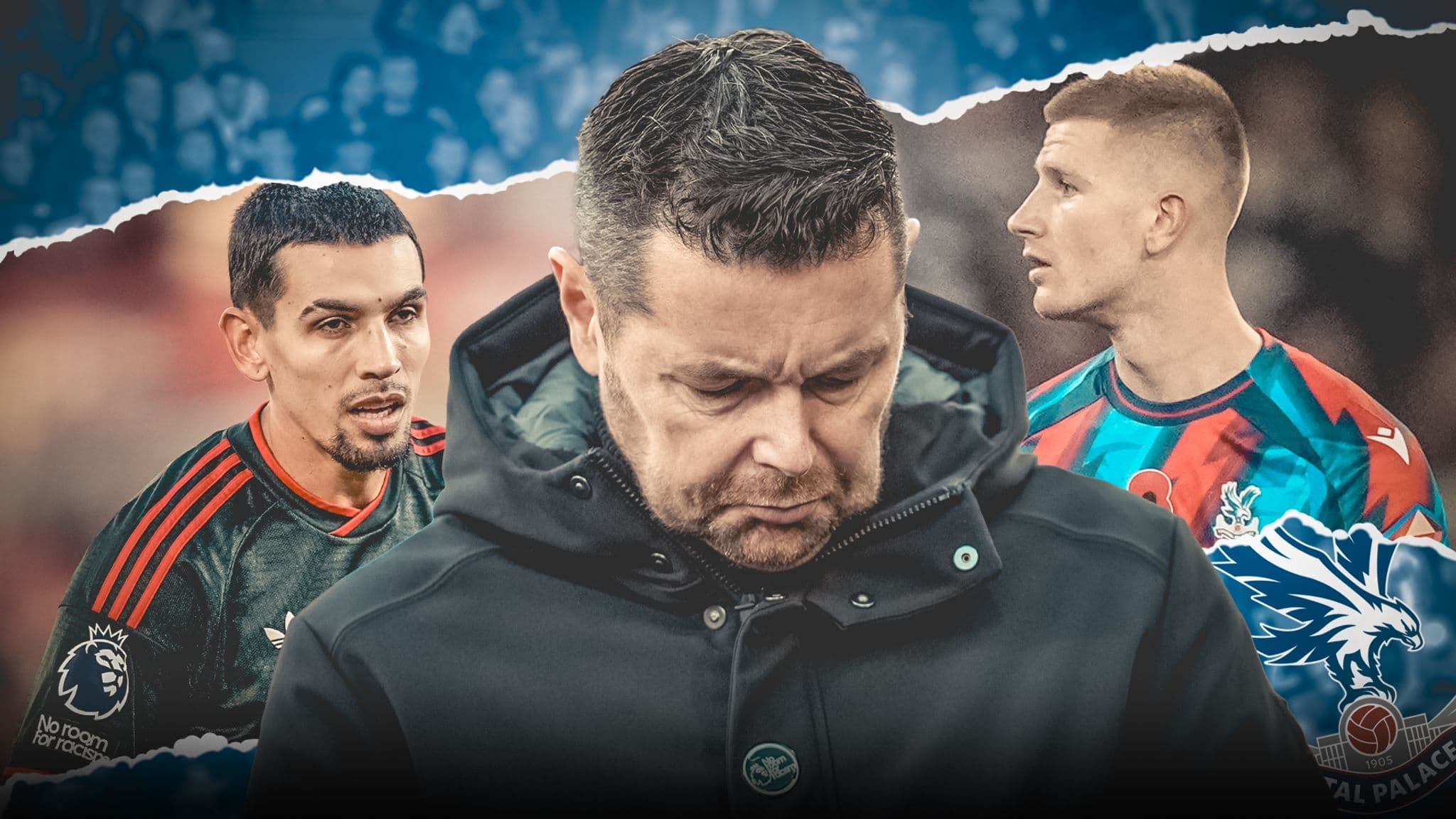
When Pierre Sage lifted the Coupe de France trophy as RC Lens manager last May, he paused to reflect with his staff on the magnitude of what they had achieved. The French club had just won its first domestic cup in history while simultaneously securing a second-place finish in Ligue 1, the joint-best league position in over two decades, all accomplished in his inaugural season in charge. With merely 56 professional games under his belt before joining Lens, Sage had become French football's brightest emerging talent almost instantaneously.
Six months later, the 47-year-old may find himself wishing he had savoured that moment longer. According to Sky Sports, since accepting the Crystal Palace position in July, Sage now sits second-favourite among bookmakers to become the Premier League's next managerial casualty. His Eagles side currently occupy the relegation zone with the division's worst defensive record, a stark contrast to the triumphant narrative that defined his time at Lens.
The collapse has been staggering in its speed. Palace have lost their last three league matches without scoring a single goal while conceding nine times. Sage has managed fewer than ten league games in England, yet his position already appears precarious. The Eagles could drop to the bottom of the Premier League if they lose to Liverpool on Sunday, live on Sky Sports.
Even as Palace fell two goals behind against Tottenham on Saturday evening, the away supporters did not direct sustained anger towards their manager. The fanbase understands what Sage has inherited, and they recognise that deeper structural problems will persist at Selhurst Park regardless of whether he remains in the dugout. After that defeat, Sage did not mince words.
It's a disaster,he told Sky Sports.
The departures that weakened the squad
Beyond immediate results, the damage inflicted by the summer exits of Daniel Munoz and Maxence Lacroix looms large. Their replacements have struggled to replicate the quality they provided. The absence of Ismaila Sarr, who scored 21 goals in 45 games last season, has been acutely felt. Adam Wharton, once a standout performer, has become a shadow of his former self over the past three months. Jean-Philippe Mateta compounded matters by receiving a red card just 13 minutes into his second Premier League start since August, forcing him to miss the next three matches.
Sage's misfortune extends beyond the pitch. Marc Guehi's sale to Manchester City in mid-January, conducted without securing a replacement, left Oliver Glasner's Palace vulnerable defensively. In the 16 remaining games that season, the club conceded 26 goals at a rate even more alarming than their current defensive record.
A rebuild was clearly necessary, and the funds generated from selling Guehi and Eberechi Eze over the previous 12 months, combined with the departures of Munoz and Lacroix, provided resources to address the problem. This represented director of football Matt Hobbs' first significant test since replacing Dougie Freedman. The results have been decidedly mixed.
Anan Khalaili, Munoz's replacement, creates chances at barely half the rate of the Colombian defender. Axel Disasi, a loanee centre-back, has been unable to replicate Lacroix's defensive dominance, winning only 54 per cent of his aerial duels. This weakness has contributed to Palace shipping five goals from set-pieces already, a tally surpassed only by his parent club Chelsea.
Replacing five key players—Eze, Guehi, Munoz, Lacroix and Michael Olise—across two years was never going to be straightforward. Yet while Palace watch enviously as Brighton continue to thrive despite losing their best talents, few new arrivals at Selhurst Park have come close to filling their predecessors' shoes, with the exception of Jeremy Pino.
The impact of missing key attacking players
Sarr's recurrence of a groin injury has deprived Sage of Palace's most productive attacking outlet from the previous campaign. When Sarr was unavailable last season, Palace's league goals dropped by nearly half to just 0.71 per game, though Mateta still managed to score 12 as their top league goalscorer. Under Sage, the pair have been on the pitch together for a combined total of merely 183 league minutes from a possible 1,170.
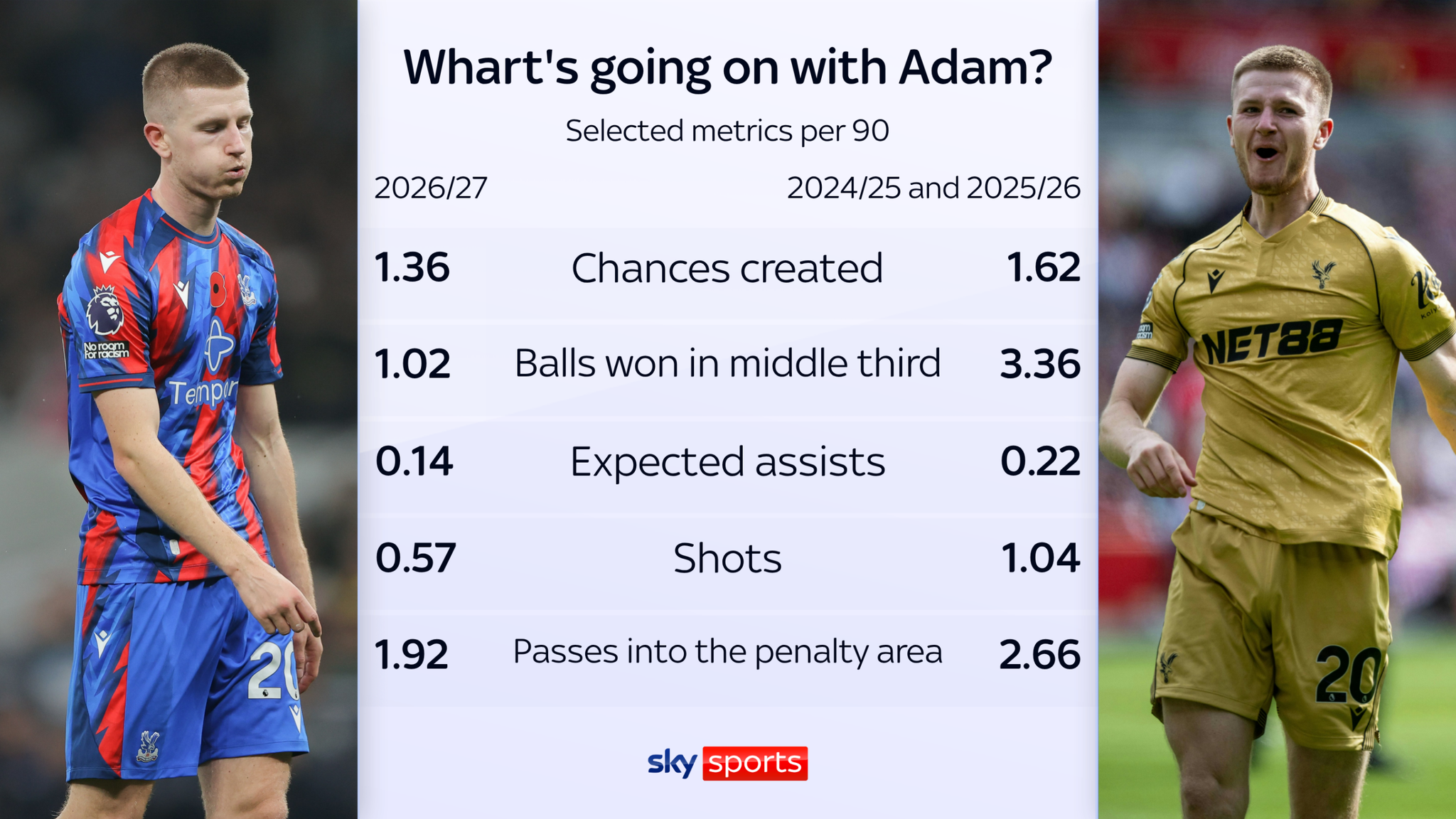
Wharton should be Palace's standout performer regardless of circumstances, but Sarr's unavailability and Munoz's departure have created a knock-on effect. With fewer players positioned to receive early forward passes when Wharton is in possession, his rhythm has suffered. Over the previous two seasons, Wharton won the ball back in the middle third more than three times per game on average. That figure has now dropped barely above one.
The 22-year-old midfielder would likely have flourished in Sage's Lens system, which was constructed around suffocating opponents, generating high turnovers and executing rapid transitions. His passing range and ability to spot runners would have functioned as a dangerous weapon, much as it had under Glasner. However, this is not that team, and that represents a fundamental problem in itself.
Tactical philosophy meets squad reality
Sage's coaching principles have remained unchanged. When questioned about Palace's porous defence following their defeat to Newcastle, he responded:
My idea is that the best way of defending is to have the ball, because then you cannot concede.Yet he inherited a squad that had maintained 42 per cent possession or less in 19 games during 2025-26, a statistic that coincided with seven of the team's 11 victories. Since Sage's arrival, Palace have won the possession battle just twice, and only two other sides have seen less of the ball. Their inability to retain possession as he demands is exacting a toll on their defensive record.
Sage is undoubtedly a talented tactician—he was briefly on Liverpool's radar this summer—but the 3-4-2-1 formation he deployed at Lens, which may have attracted Palace's interest, was predicated on opposition-half pressure and high tempo rather than the counter-attacking approach Palace have become known for. His Lens side produced the second-most high turnovers resulting in a shot last season. No team in the Premier League this season has managed fewer than Sage's Palace.
Before the Hoffenheim match on 5 November, Sage noted that Palace were working to improve attacks through opponents' defensive lines and acknowledged the team had played eight matches in 25 days, a demanding schedule that may have contributed to their struggles.
Recent developments and player backing
A glimmer of respite emerged when Crystal Palace drew 1-1 with Hoffenheim on 5 November after Daichi Kamada scored a stoppage-time equaliser. Although Adam Wharton was sent off during the match, the result offered Sage some respite amid mounting pressure over his position. Goalkeeper Dean Henderson has publicly backed his manager, stating he was "fully behind" Sage and praising the team's attacking play. Henderson also urged the Holmesdale Fanatics to return after the group suspended organised activity at matches, contributing to a quieter atmosphere at Selhurst Park.
The broader question of fit
This raises a pertinent question about Palace's original reasoning in appointing Sage. His tactical demands align far more closely with those of Andoni Iraola, the manager Palace pursued extensively this summer before he joined Liverpool. Iraola's Bournemouth team were also stylistically distinct from the Eagles' traditional approach.
Ultimately, should Palace's poor form persist and Sage's position become untenable, the issue may not be that he is the wrong manager for Palace, but rather that Palace are not the right club for him. His philosophy and the squad's capabilities have proven incompatible, a mismatch that no amount of tactical adjustment can fully resolve in the short term.
What happens next
Crystal Palace will host Liverpool on Sunday 8 November at 14:00. Axel Disasi is available for selection, while Ismaila Sarr is expected to remain sidelined until after the November international break. The result against the Reds could prove decisive in determining whether Sage's tenure survives the coming weeks.