
Kimi Antonelli is edging closer to becoming Formula 1's youngest-ever world champion, and the scale of his achievement is starting to invite comparisons with some of the sport's most unexpected title triumphs of the modern era.
The 2026 season has now reached its summer break, and Antonelli has built a 50-point cushion over Ferrari's Lewis Hamilton in second place heading into the Dutch Grand Prix, which runs from August 21-23.
The 19-year-old Italian has already won six of the first 11 grands prix this year, and his advantage makes him the outright favourite to still be leading the championship once the remaining 12 scheduled rounds have been completed.
His lead could have been even more commanding but for an engine failure in Barcelona and a wheel-guard problem at Silverstone, both of which cost him a significant chunk of points.
There remains plenty of work still to do, however, with Mercedes' early dominance having cooled off as Ferrari and McLaren shared three wins between them across the last five races before the break. Antonelli may now have to fight for the title without the fastest car on the grid, all while carrying the weight of trying to close out a first world championship.
Why Antonelli's title bid counts as a genuine shock
Twelve months ago, Antonelli had never won a grand prix. His rookie season had been built around a Sprint pole in Miami and podium finishes in Canada, Brazil and Las Vegas - solid, but hardly the résumé of a runaway title favourite.
Fast-tracked into one of the sport's most coveted seats to succeed the Ferrari-bound Hamilton at the start of 2025, Antonelli's first year left plenty of observers wondering whether he really was the generational talent Mercedes had been insisting they'd found.
Even accepting that much of his difficulty last year stemmed from inexperience and the sheer demands of life as an F1 driver rather than any shortage of natural ability, few people were predicting he'd be a 2026 world champion.
The biggest reason for that scepticism was the reputation of his team-mate, George Russell, who had comfortably held his own alongside seven-time champion Hamilton across three seasons together, before finishing well clear of Antonelli in the 2025 standings, 319 points to 150.
So even with Mercedes delivering the strongest car of the grid following F1's regulation reset for 2026 - which is roughly what had been expected - it seemed a stretch to think Antonelli could make the kind of leap over one winter needed to get the better of Russell across a full campaign.
There was also the small matter of Hamilton, four-time champion Max Verstappen and reigning champion Lando Norris all lurking, ready to pounce on any opening. Throw in the fact that the youngest champion in F1 history is currently Sebastian Vettel, who was 23 years and four months old when he won his first title, and Antonelli - who turns 20 later this month - looked an unlikely candidate to break that record.
Max Verstappen and Lando Norris have both since gone on record praising Antonelli's temperament through this run, describing his form as rock solid at the top of the standings, though Mercedes boss Toto Wolff has been more cautious, insisting it remains too early to crown him the outright favourite.
That caution from Wolff has since been echoed elsewhere. According to Motorsport.com, Wolff said in July it was "too early" to label Antonelli the title favourite despite his 50-point cushion, pointing to Mercedes' reliability concerns with 11 races and two sprints still to come.
It is also worth remembering just how unfancied Antonelli was even a few months ago. Motorsport.com reported that he was rated only sixth among the 2026 title contenders at one stage, with question marks hanging over his youth and racecraft, as detailed by Motorsport.com.
Sky Sports pundit David Croft had earlier argued that Norris could still retain his title after the McLaren driver's win in Hungary cut his deficit behind Antonelli to 91 points, a gap that has since narrowed further as Antonelli's overall lead over the field has settled at 50 points ahead of Ferrari's Hamilton.
The identity of Antonelli's closest challenger has itself shifted over the course of the season. The Athletic reported that Russell had originally been viewed as his main championship rival, yet by early June Hamilton had already emerged as Antonelli's closest pursuer in the standings, according to The Athletic.
Reuters reported on June 8 that Antonelli had already become the youngest driver in history to lead the F1 championship, having stretched his advantage at that point to 66 points over Hamilton and 68 over Russell, per Reuters. Formula1.com has also noted that Antonelli became only the 23rd driver in more than 75 years of the sport to win three consecutive grands prix, a statistic cited as evidence he is genuinely on course for the title, according to Formula1.com.
Antonelli himself has been careful not to get carried away. Speaking to Formula 1's official website ahead of the Austrian Grand Prix, he said winning the title is "not going to be a walk in the park," while Mercedes have introduced new intra-team rules for the run-in, as reported by Formula1.com.
As Antonelli pushes on with his title bid, here's a look back at some of the drivers who previously defied the odds to become world champion.
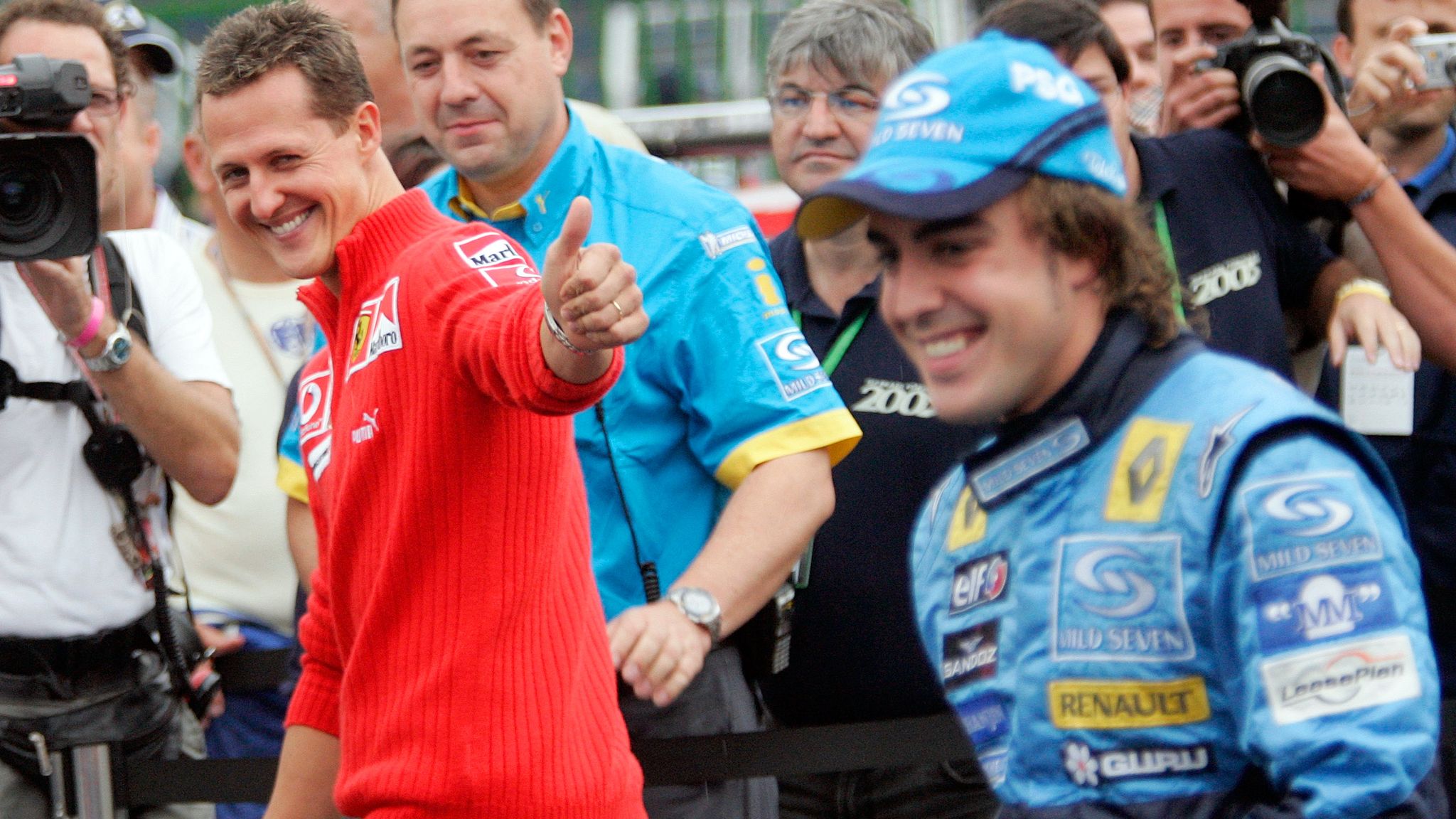
Fernando Alonso, Renault - 2005
Much like Antonelli now, Fernando Alonso arrived in 2005 tipped as a future star, but even his biggest admirers didn't foresee the dominance he produced that year, sealing the title with two races still to run.
Alonso had managed just a single grand prix win before that season, but Renault suddenly became genuine front-runners after a key regulation change banned tyre changes during pit stops.
He built an early championship lead as Renault won the first four races, and further benefited when his main rival, McLaren's Kimi Raikkonen, was hit by a string of reliability failures.
His team-mate, Giancarlo Fisichella, simply couldn't live with the pace of the then-24-year-old Spaniard, who became the youngest world champion in F1 history at that point.
Michael Schumacher had claimed the previous five drivers' championships, but 2005 felt like a genuine changing of the guard - one Alonso confirmed by retaining his title the following year in 2006.
Jenson Button, Brawn - 2009
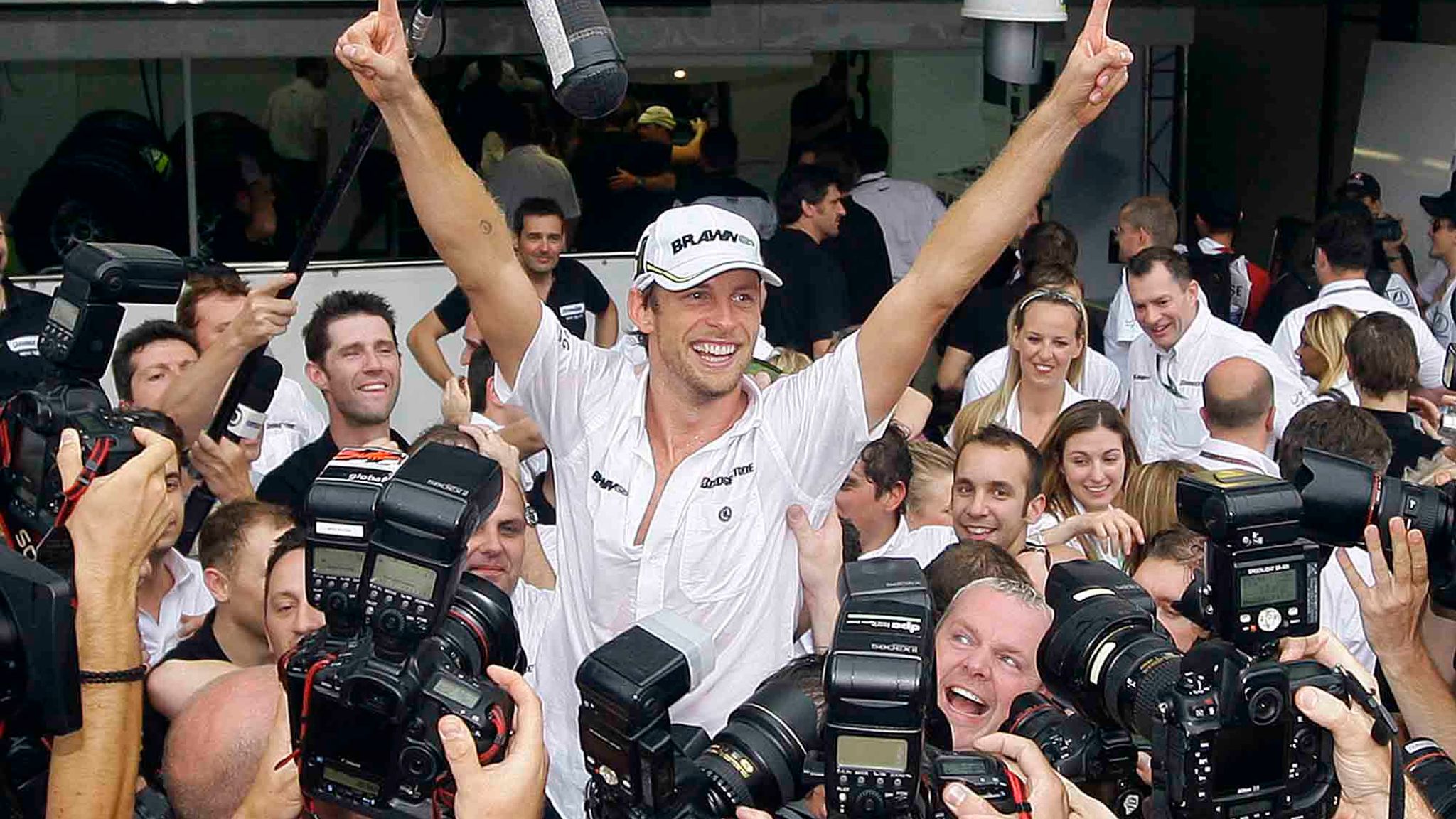
Arguably the biggest shock in the sport's history came in 2009, when Jenson Button and the newly formed Brawn team turned fortune on its head.
Partly a consequence of the 2008 financial crash, Honda's sudden exit from F1 left Button, team-mate Rubens Barrichello, team principal Ross Brawn and chief executive Nick Fry all facing unemployment.
Brawn and Fry instead bought the team for £1 and pulled off the unthinkable, designing and building a car that opened the season as the benchmark of the grid.
Button, who had only ever won a single race, at the 2006 Hungarian Grand Prix, and Barrichello delivered a stunning one-two finish at the season opener.
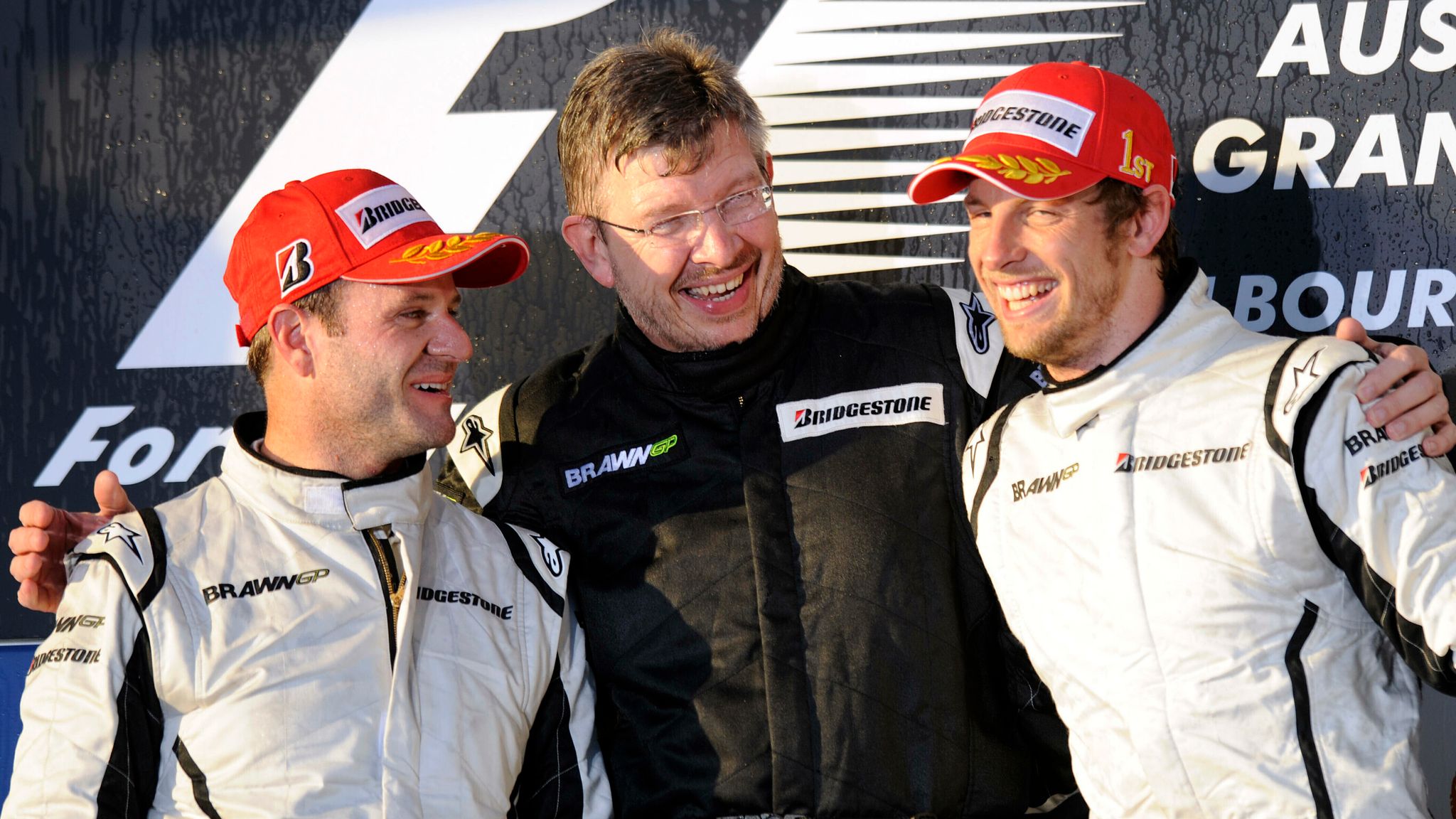
The Briton went on to win six of the first seven races before budget constraints allowed his rivals to close the gap as the season wore on.
Button held his nerve regardless, sealing the title ahead of Red Bull's Sebastian Vettel, before Brawn GP was subsequently bought out by Mercedes the following winter.
Nico Rosberg, Mercedes - 2016
Having lost out to Mercedes team-mate Nico Rosberg's charge... no - having beaten team-mate Nico Rosberg to the title in both 2014 and 2015, Lewis Hamilton went into 2016 as the overwhelming favourite to become a four-time champion. Rosberg, though, had other plans.
While Hamilton had only wrapped up the 2014 title at the final race, 2015 was far more comfortable, with the championship secured with three rounds to spare.
Hardly anyone gave Rosberg a chance of beating Hamilton across a full season, yet everything clicked for the German in 2016.
He won the opening four races while Hamilton struggled to find his rhythm in the car, and Rosberg also capitalised on his team-mate's reliability troubles to open up a 23-point lead with five rounds remaining.
Victory in the Japanese Grand Prix meant Rosberg only needed to finish second in each of the final four rounds to be crowned champion. By that stage he had already begun weighing up retirement if he achieved his dream, and the pressure on him was immense.
Hamilton duly won all four remaining races and tried to use his other Mercedes to back up Rosberg at the season-ending Abu Dhabi Grand Prix, but Rosberg held firm to finish second, enough to clinch the title.
What happens next
Formula 1 resumes after the summer break with a Sprint weekend at the Dutch Grand Prix, running from August 21-23, with every session broadcast live on Sky Sports. Fans can stream Sky Sports via NOW, with no contract and the option to cancel at any time.
Before that, though, attention turns to the Austrian Grand Prix, where Mercedes' newly introduced intra-team rules are set to be put into practice for the first time as the team looks to manage the dynamic between Antonelli and Russell during the title run-in, according to Formula1.com. With both Mercedes drivers' contract situations already under scrutiny, as outlined in our rundown of every driver's deal for 2026, the second half of the season promises to be just as fascinating off the track as on it.


